
Early October, unusual high pressure. The wind off the ridge, the Coleman cracking somewhere behind me, the north face of Kulshan freshly white and quiet about it. Below, Glacier Creek and Clearwater Creek fall away from each other into the folds of the valley. Two of the rivers first voices, before she is the North Fork, the Middle Fork, before she is the Nooksack.
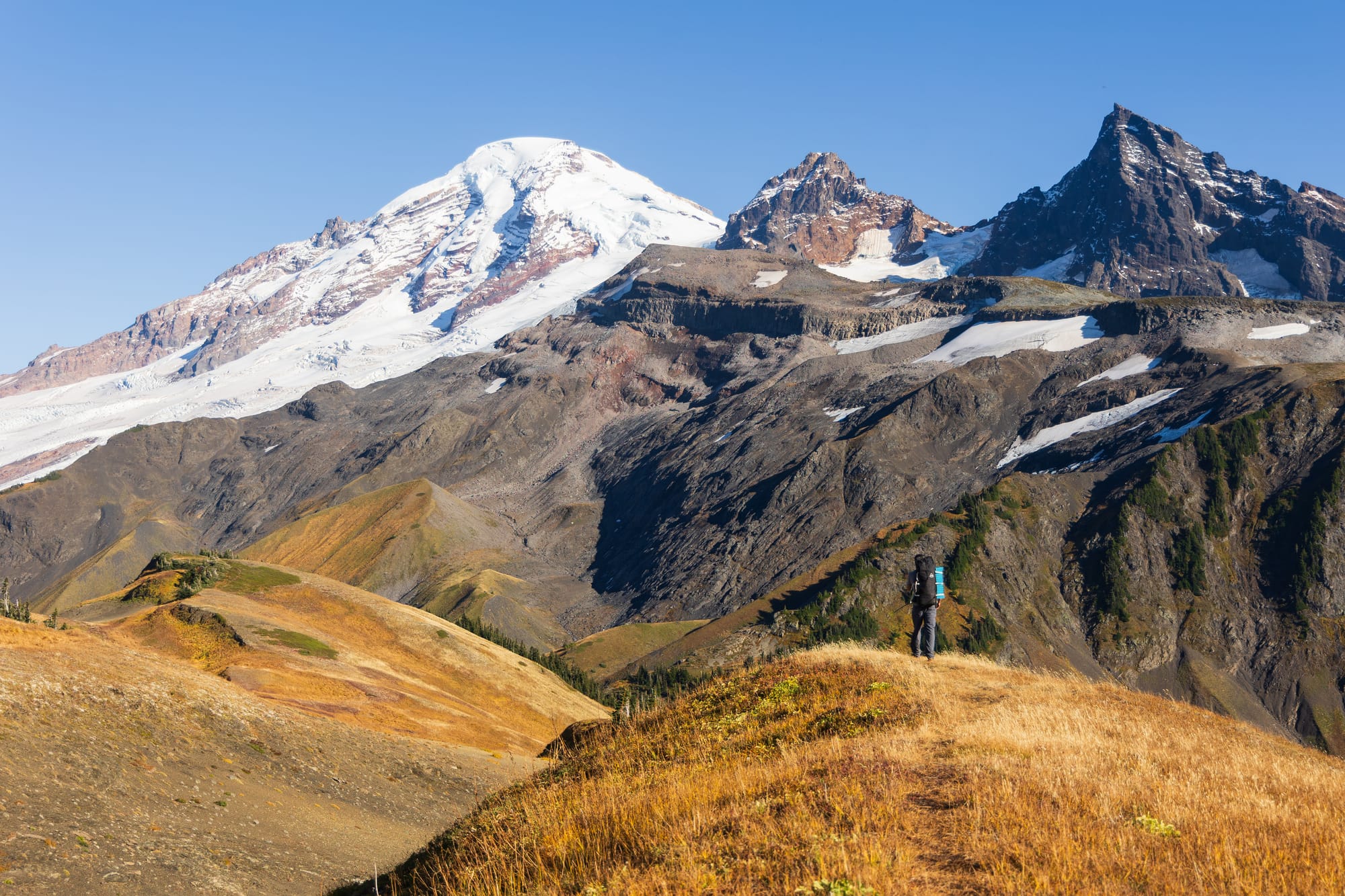
I come up here to listen, mostly.
CRACK. Another collapse on the upper Coleman. The sound reaches me a second after the ice has already moved — a long rolling snap, then nothing. Flurries at the edge of the ridgeline. The chill is a reminder that this weather won’t be here long.
There is no one true headwater here, which is to say there is no one true story. Walk a hundred yards along the ridge and the drainage you called the source slips a little east or west. Follow another creek down and you’d be writing about a different river entirely. The work I am trying to do is less about finding a beginning than admitting there isn’t singular one.
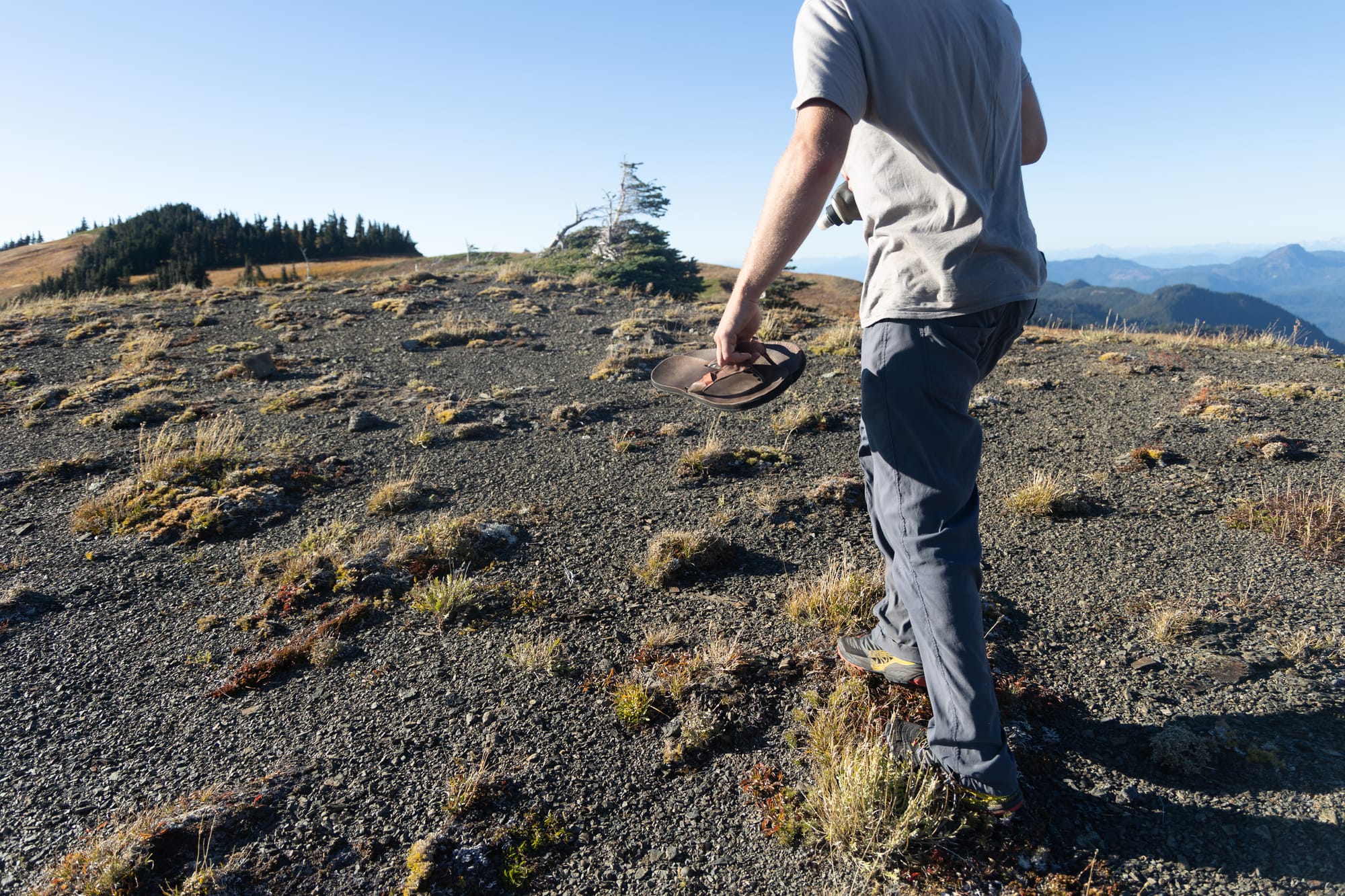
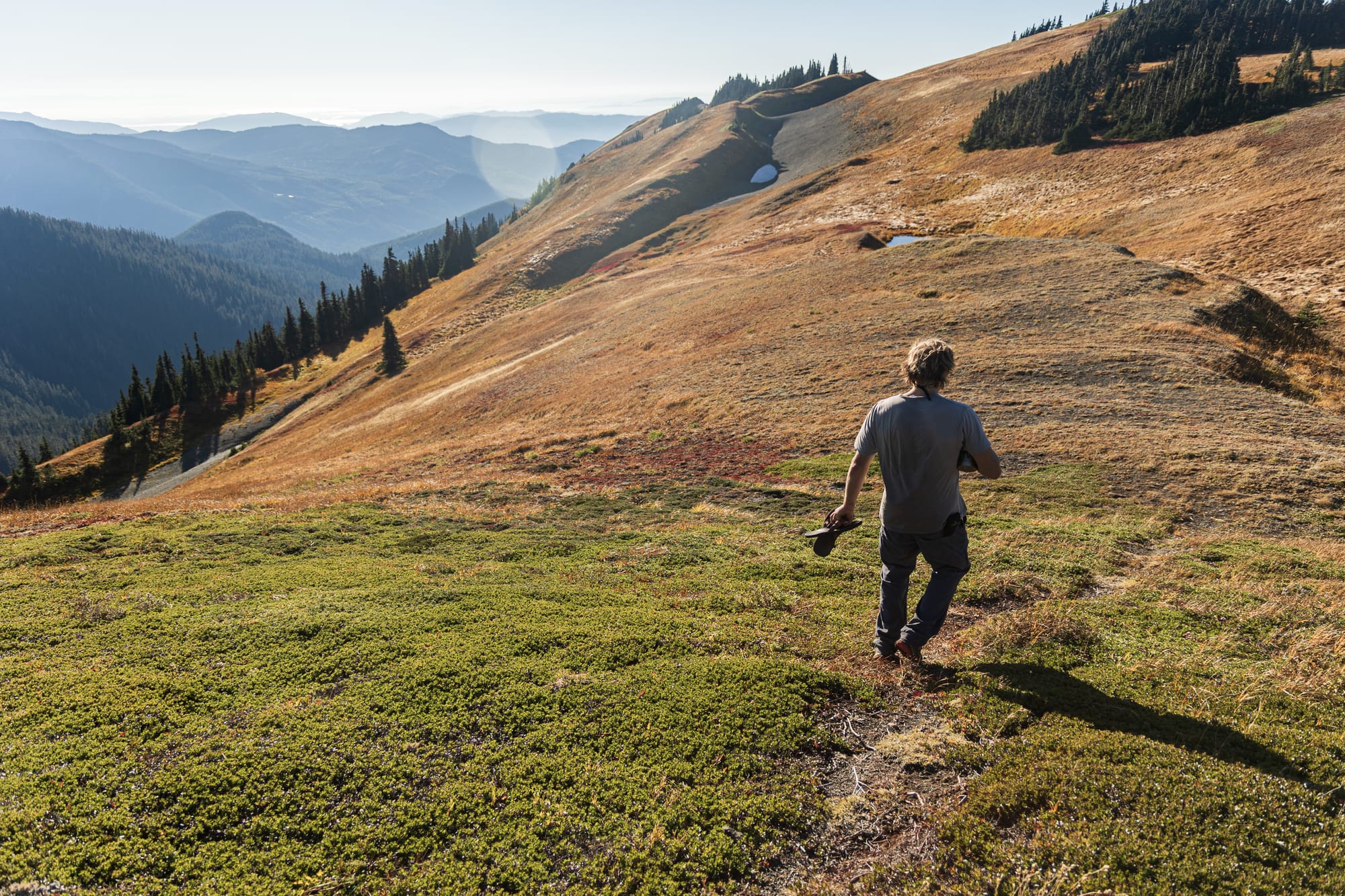
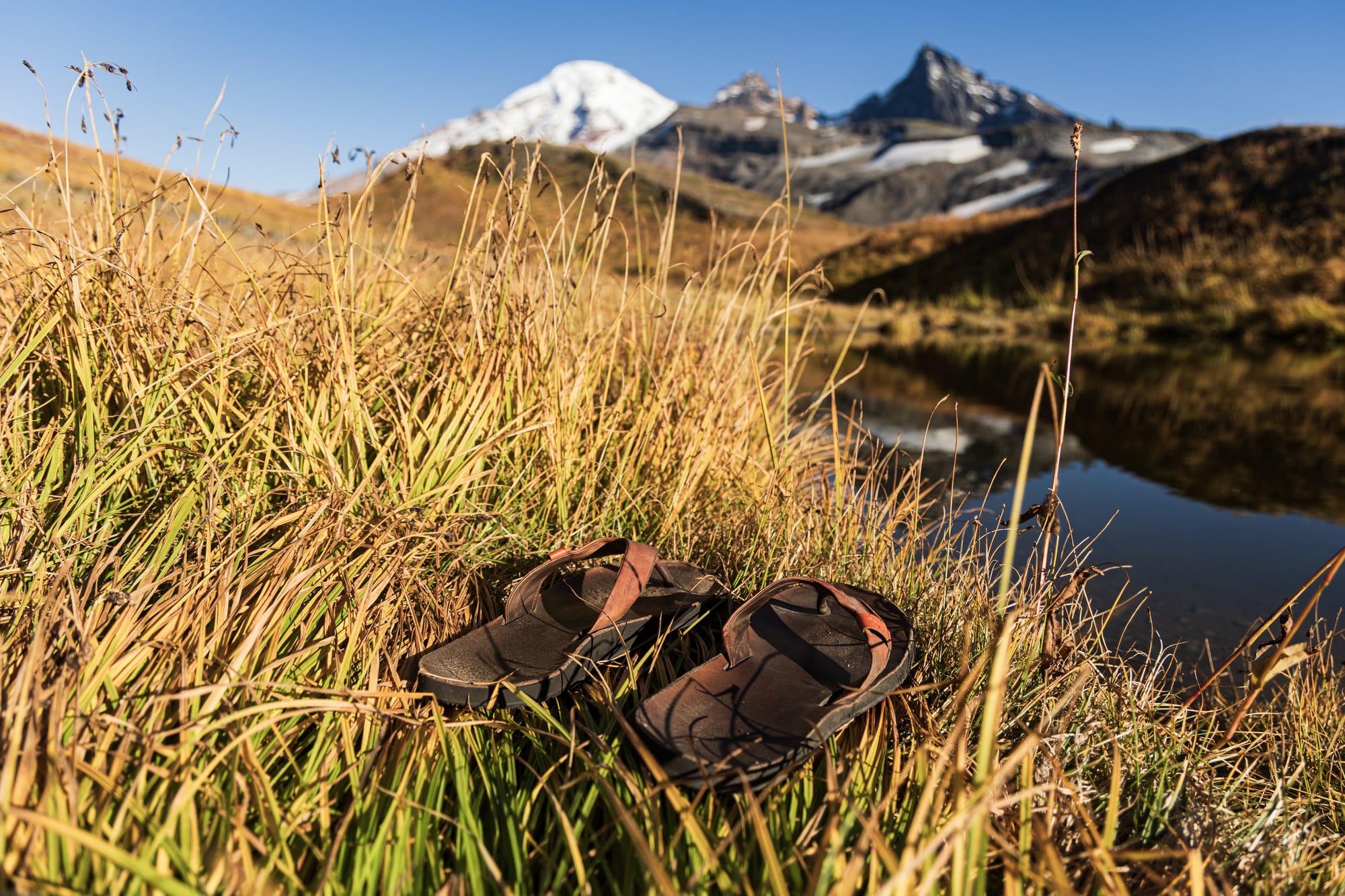
What I can write here is not an account of the Nooksack. It is one afternoon. One tarn. The tarn is just below camp, off the trail, in a bowl of dry heather and burnt gold grass. I take my shoes off at the edge. The cold moves up my spine and settles in my jaw. Kulshan floats on the surface, inverted. I go under once, come up, and the mountain reassembles itself in the ripples.
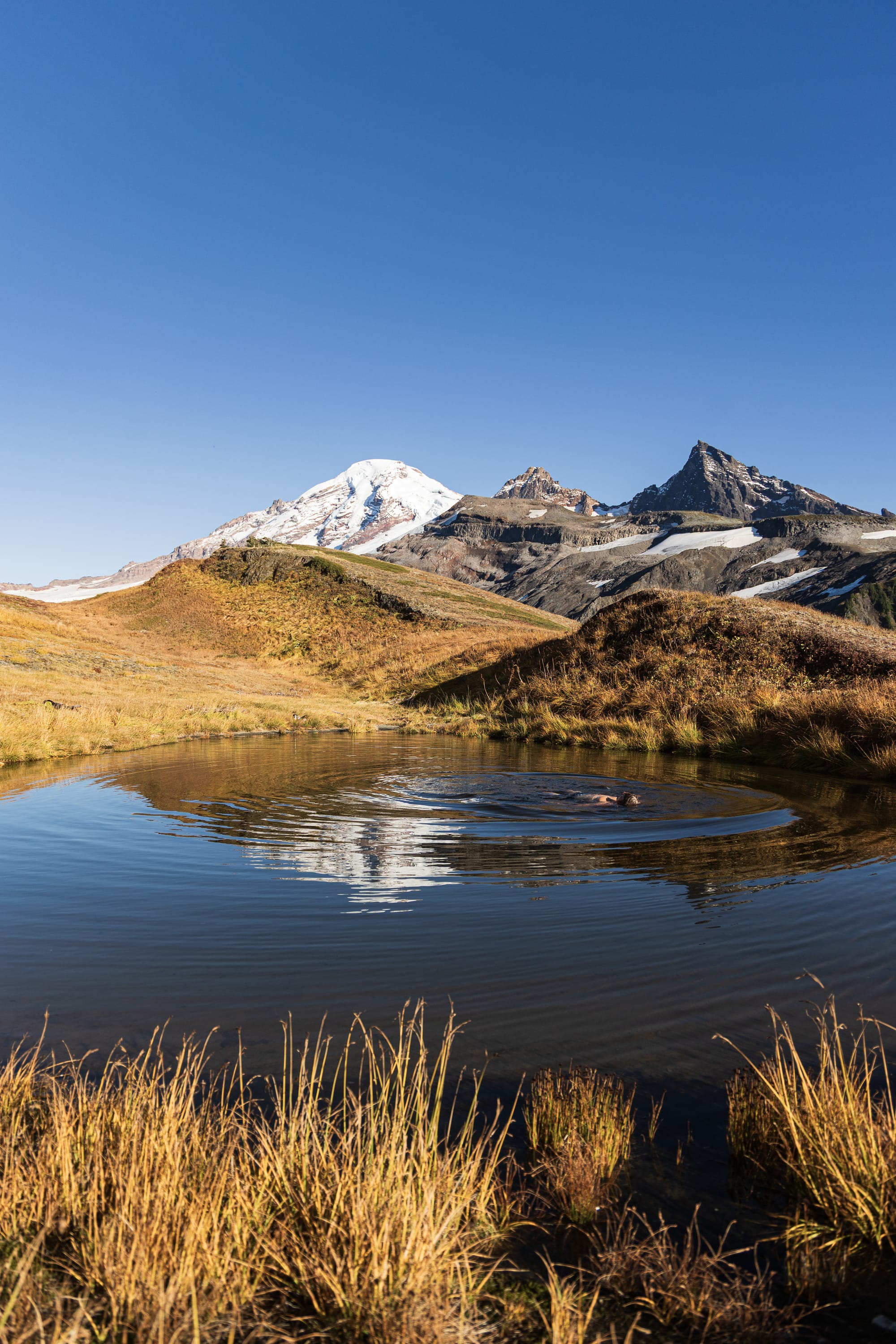
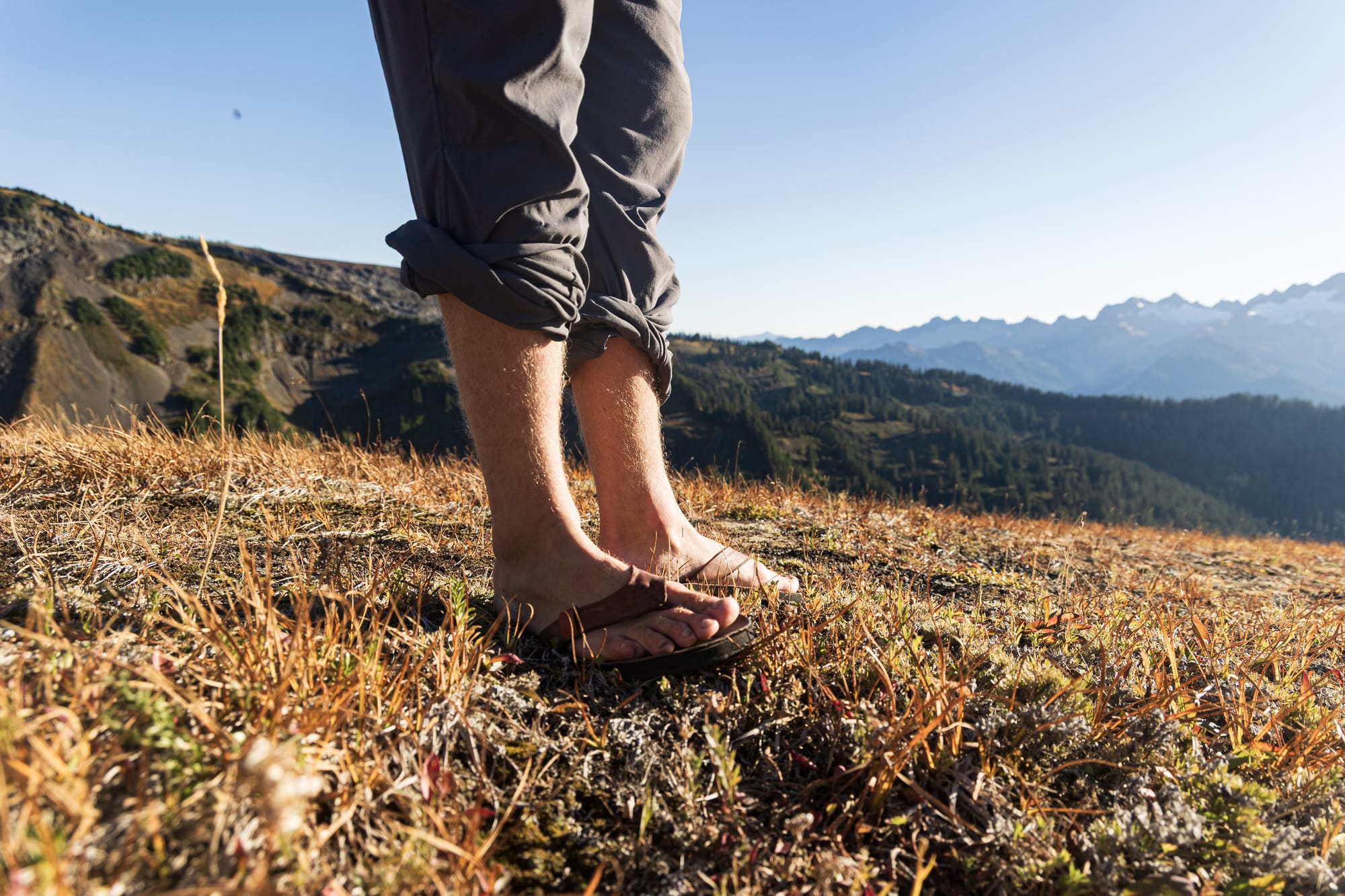
Afterwards, back in the flip-flops, picking my way to camp. The heather spongy and warm underfoot. There is no trail here. I came up to see the start of her. I’m leaving with less certainty than I arrived with about what the start even means.
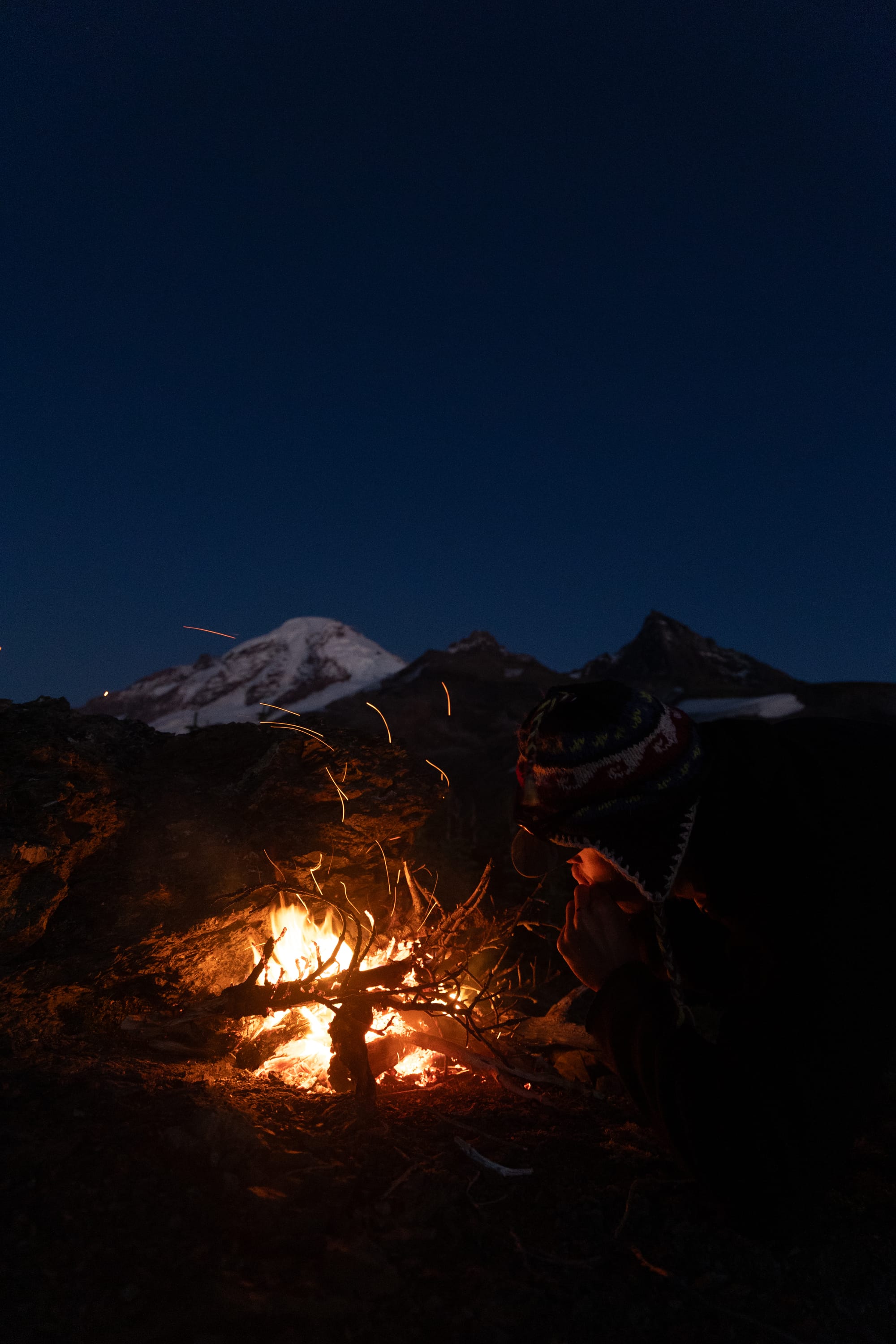
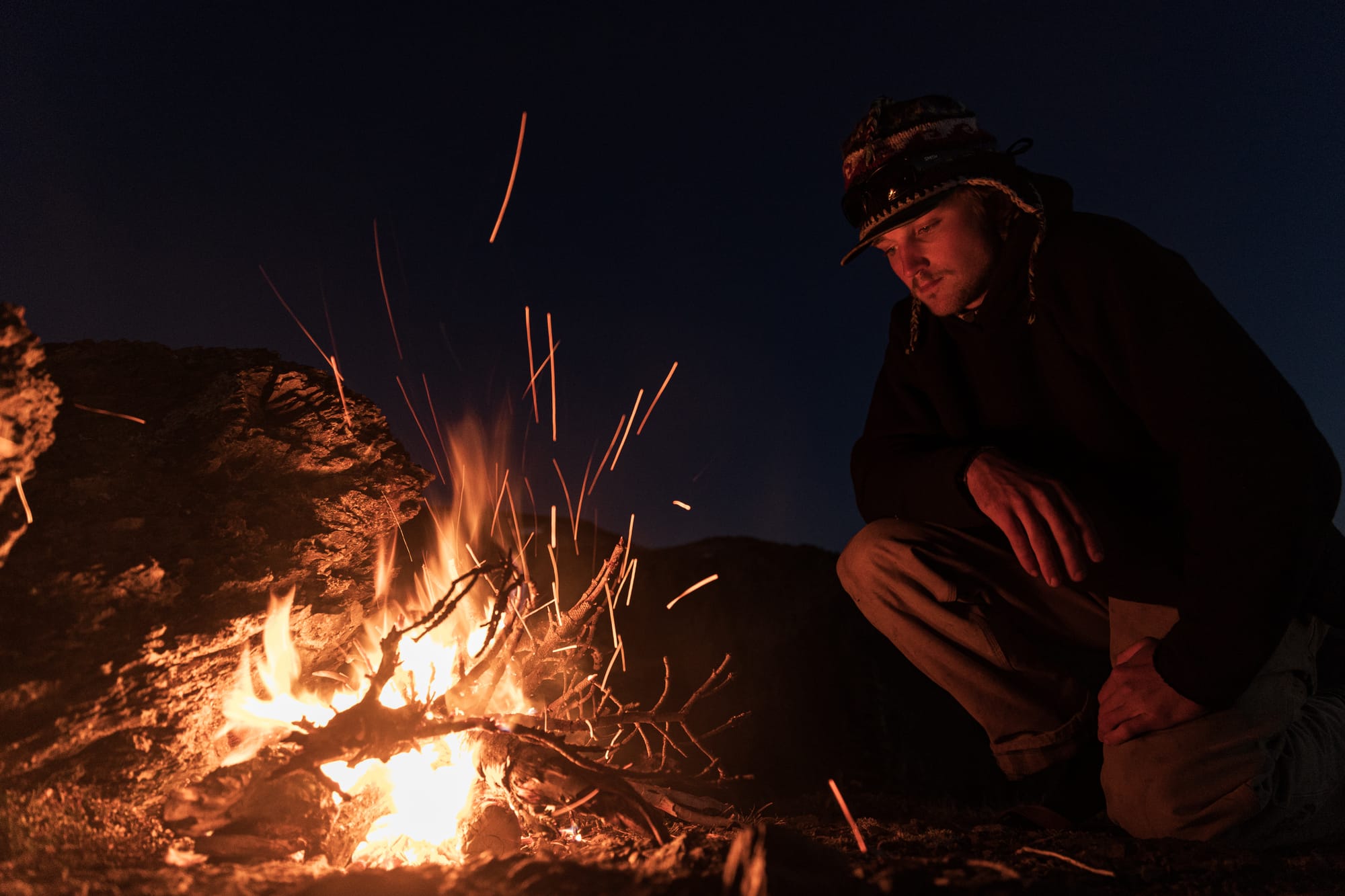
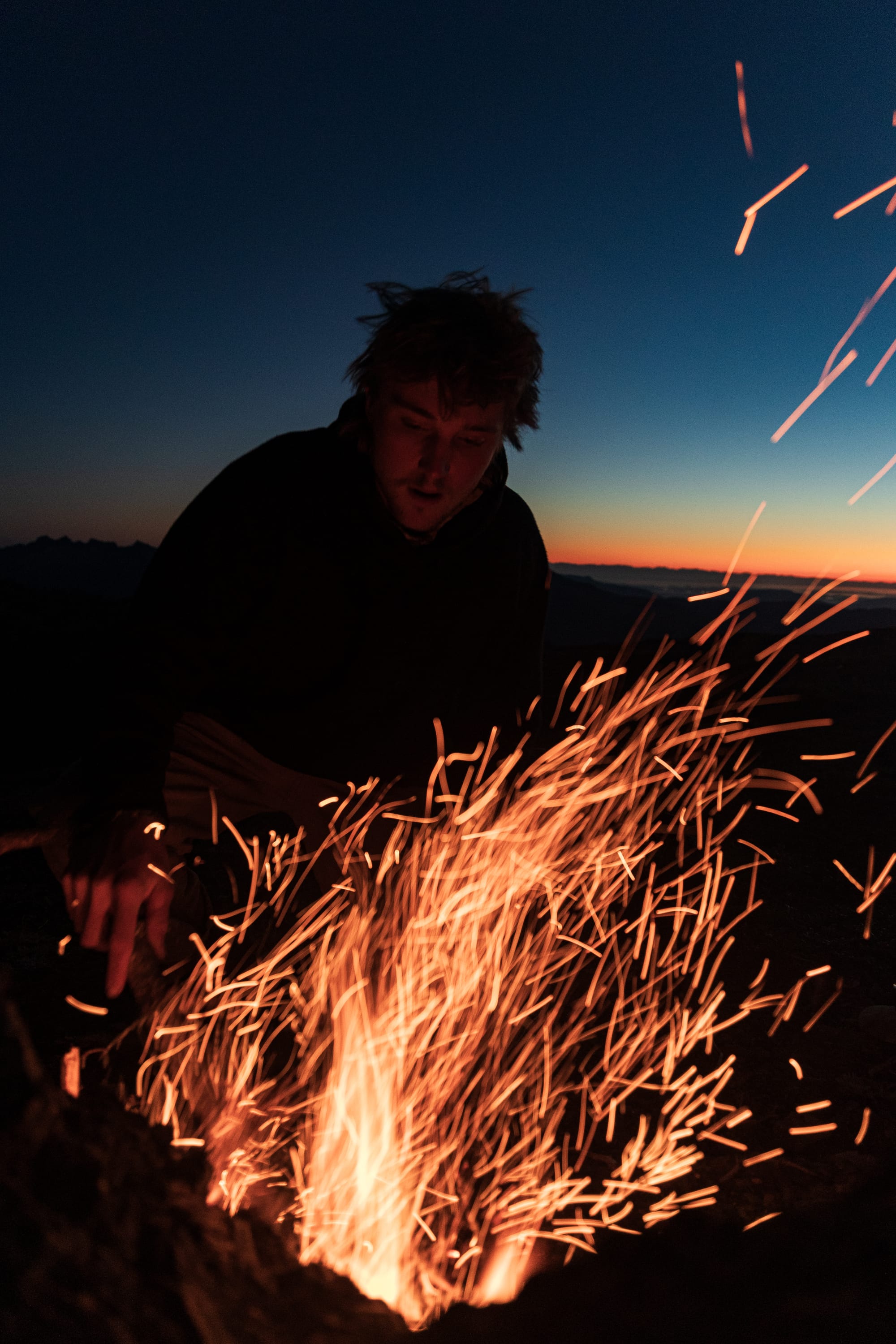
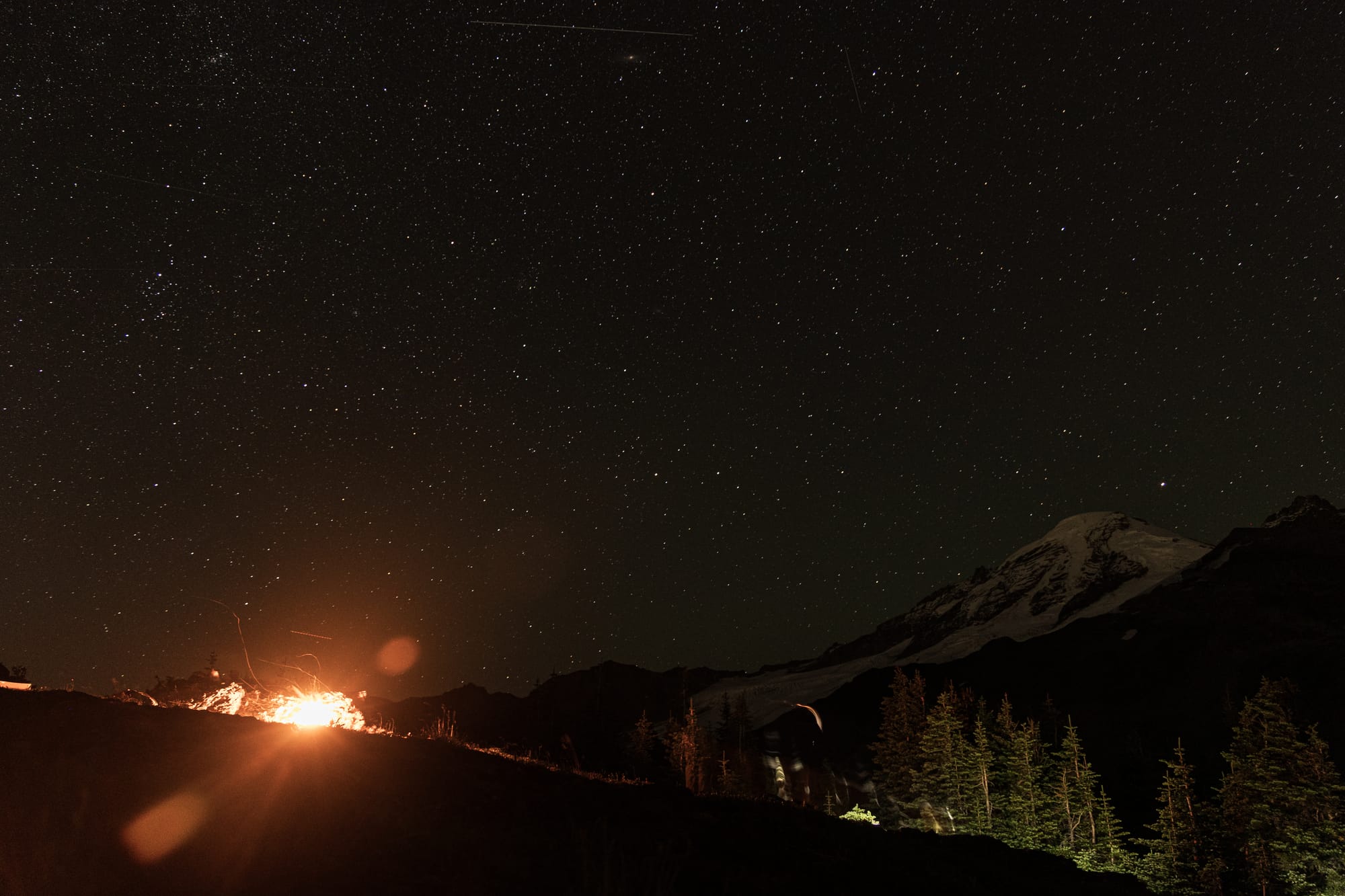
The fire is small. The stars come up above Kulshan, and somewhere below me in the dark, Glacier Creek is doing what she has always done, carrying the mountain, one grain at a time, down to the sea I can just barley see from here.
Carried on this trip: GRADA flip-flops, handmade by our friends in Salmon, Idaho.


