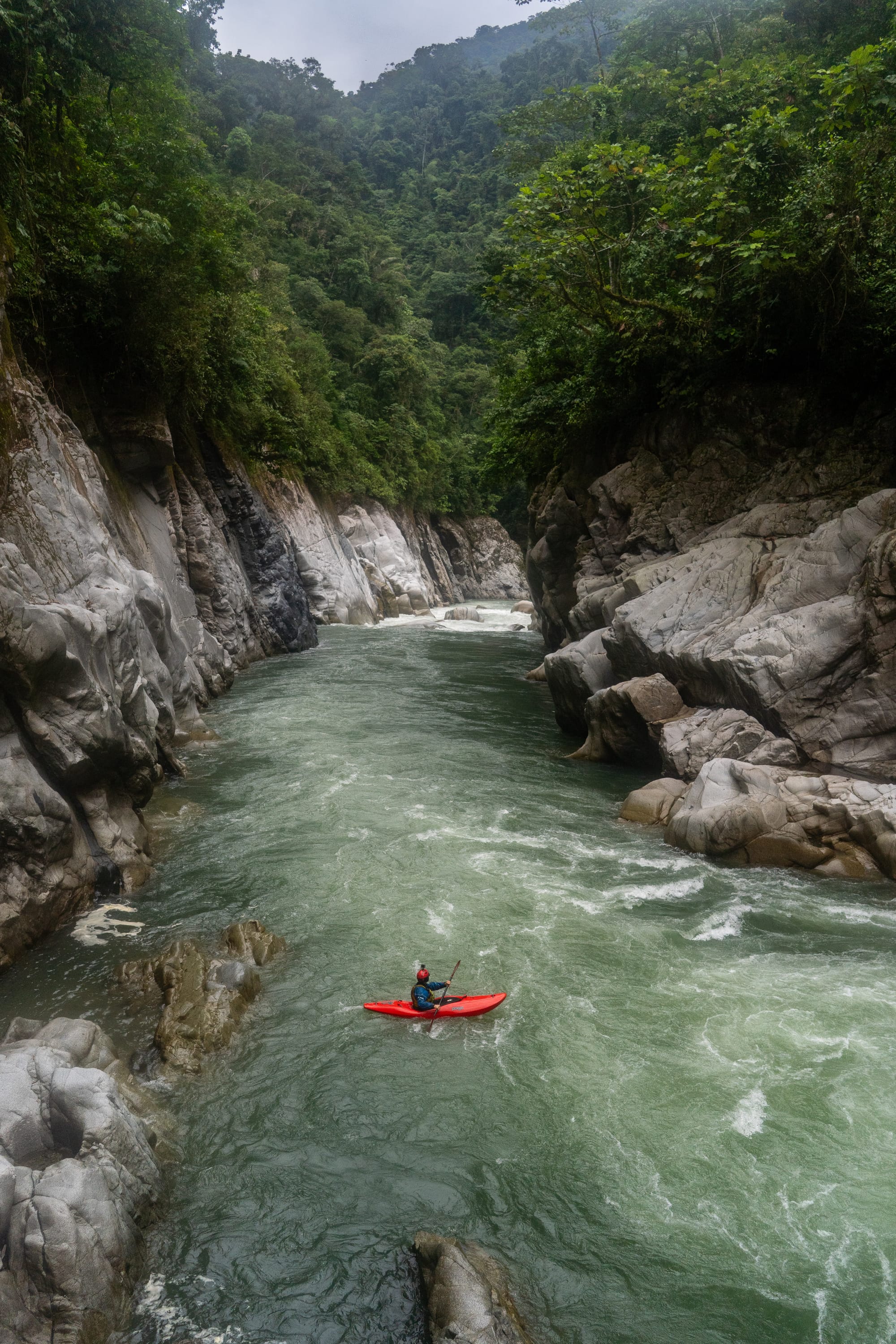
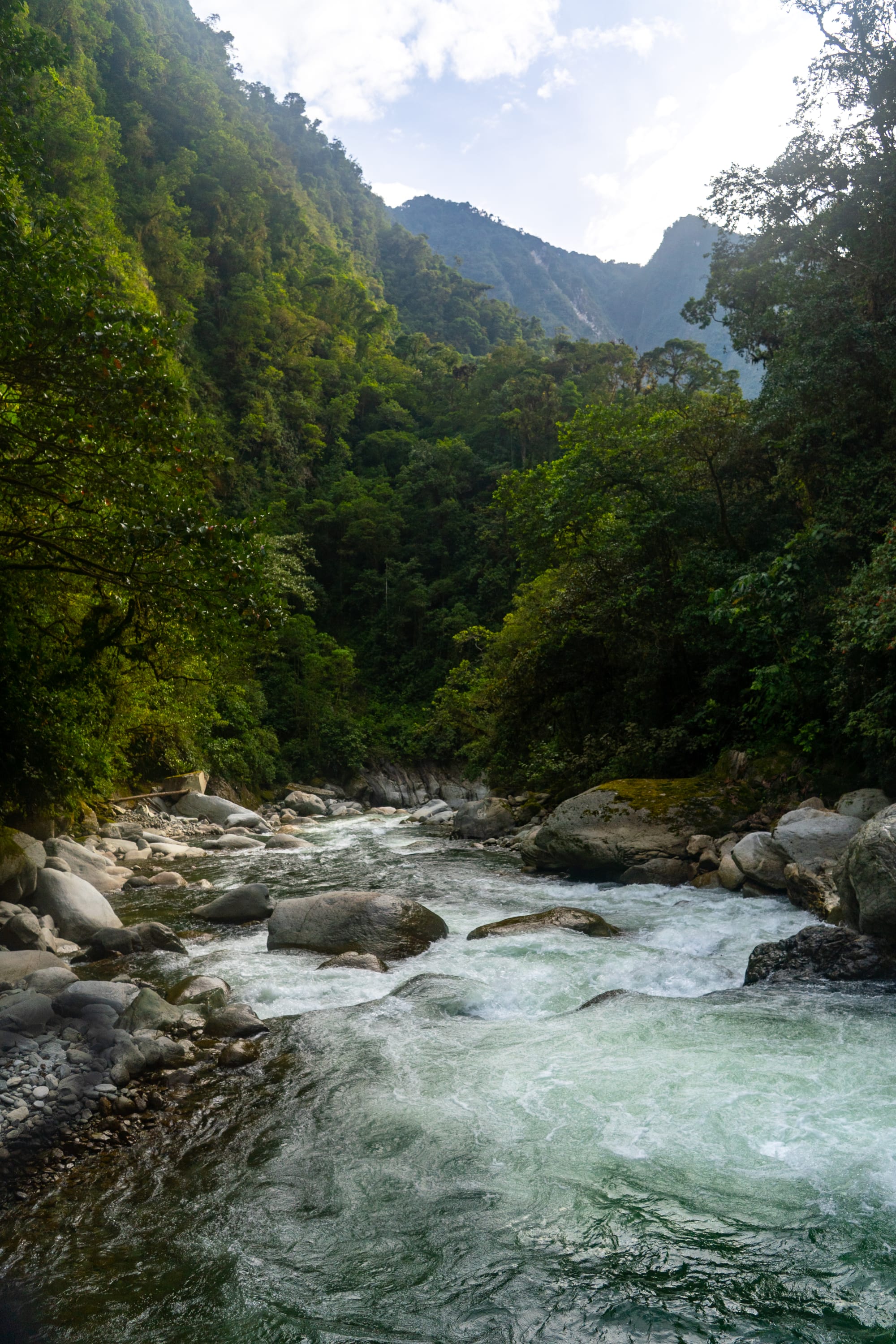
On New Year's Eve 2025, we paddled through the confluence of the Verdeyaku and Jatunyacu rivers, upstream of Tena in Ecuador's Napo province, completing the first documented descent of the Mulatos — one of the Jatunyacu's main tributaries. As far as we know, we hold the only existing footage of that confluence. Months later, two hydroelectric projects, Cerro Azul and Cerro Blanco, surfaced publicly, seeking water rights at that same confluence.
The proposal
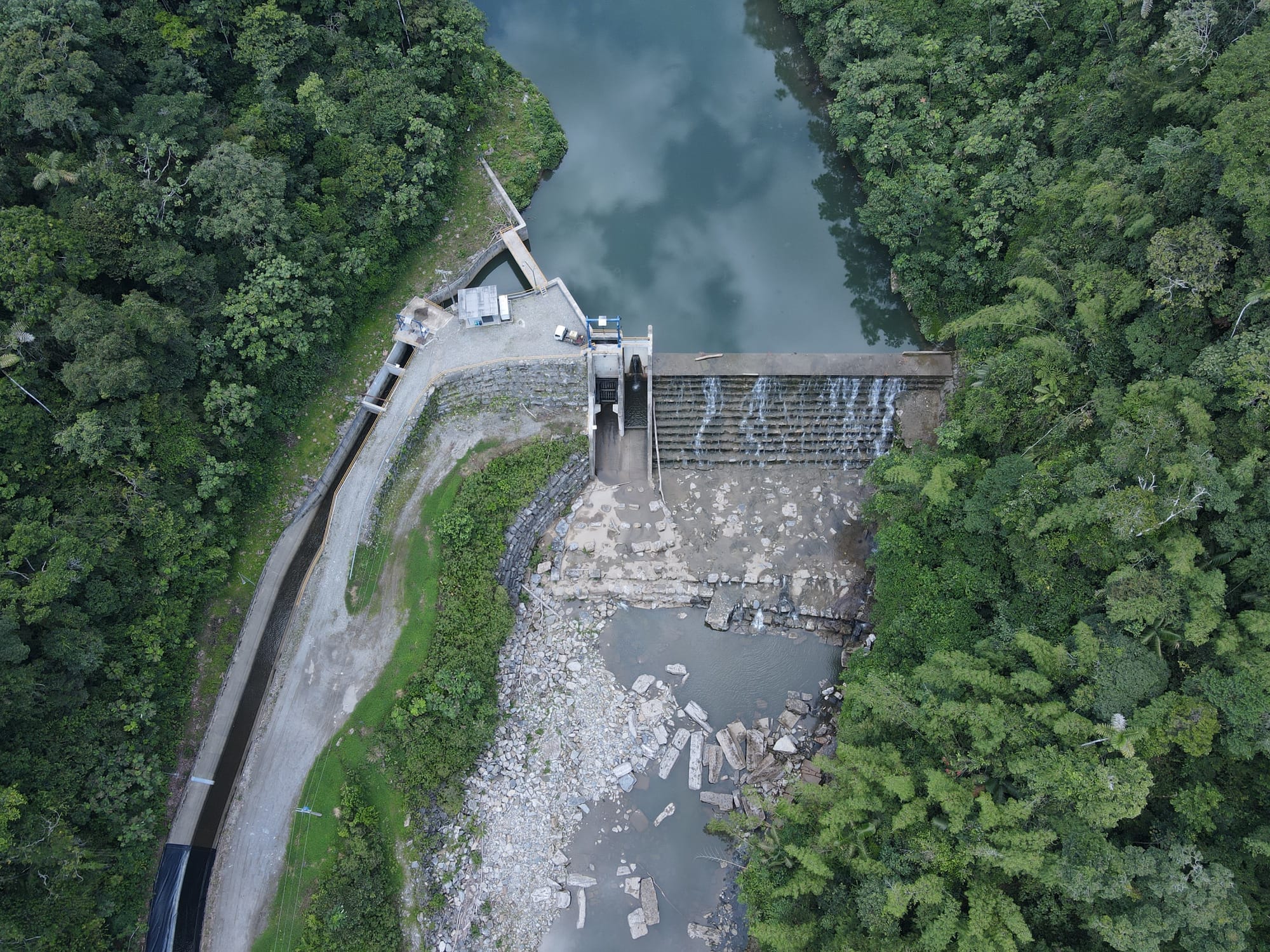
Cerro Azul and Cerro Blanco are two hydroelectric projects currently moving through Ecuador's water-use authorization process with the Ministry of Environment and Energy. The applicant of record is a newly formed company, Generadora Cerro Blanco S.A.S., with a sibling entity understood to hold the Cerro Azul filing.
Public notices describe a request substantial enough to draw heavily on the combined flow of the Verdeyacu and Jatunyacu rivers. A separate, unofficial planning document — reviewed by the Ecuadorian Rivers Institute (ERI) — describes a project sized, it appears deliberately, just beneath the threshold that would trigger stricter regulatory review. Neither the public notices nor the leaked document have been confirmed against the official technical file, which still hasn't been made public. Based on what the RIVERS team measured while paddling through the confluence, the proposed diversion would draw off somewhere close to half the river's flow at that point.
A public hearing on the projects was cancelled after community objections over inadequate notice.
The citizen coalition Napo Ama la Vida filed formal legal opposition the same day, citing the constitutional right to environmental consultation, a landmark ruling on the rights of nature, the collective right to free, prior, and informed Indigenous consultation, and the precautionary principle.
The company
Generadora Cerro Blanco S.A.S. is a newly formed entity tied to Elitcorp SA. Elitcorp has an established track record in Ecuadorian hydro development: it built the Pusuno hydro project, attempted the Piatúa project through a related company — a fight still contested in Ecuador's Constitutional Court — and has other projects moving forward in southern Ecuador. The company is also reportedly in talks with the Cofán nation over a separate proposed project on the Cofanes River, further north.
Across all of these, the pattern is the same: a permit application in a watershed with little public visibility, moving forward with minimal notice until it's already well underway.
The road
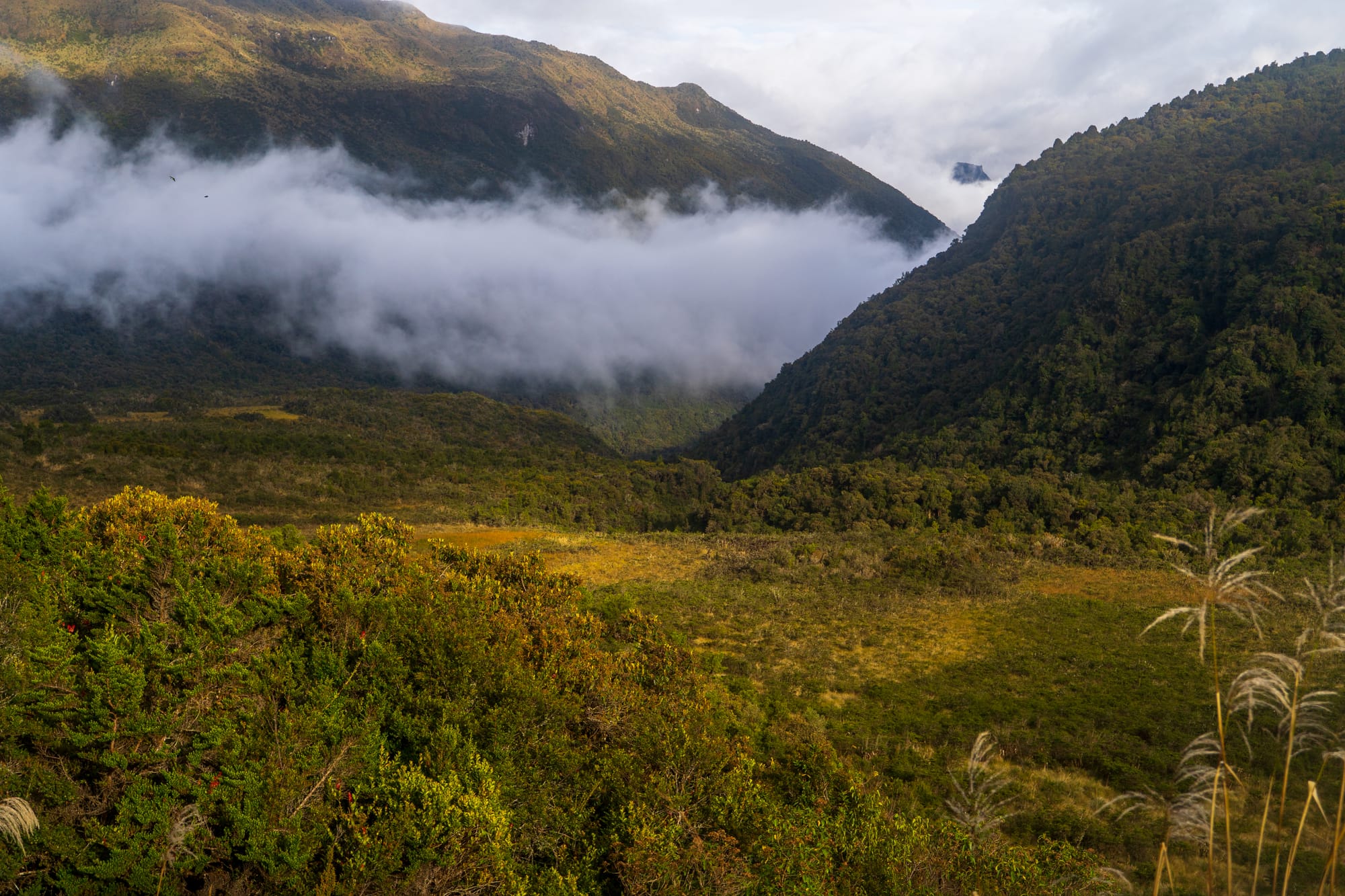
Cerro Azul and Cerro Blanco sit at the center of a much older fight: the proposed extension of the Tena–Salcedo road, a route provincial political interests have pushed for years, with renewed momentum ahead of the region's upcoming local elections. Reaching either dam site requires a road that would run through the Reserva Biológica Colonso-Chalupas.
The legal mechanics matter here. A water-use permit inside a national park or protected area faces no special restriction under Ecuadorian law — what's restricted is new road construction.
The water permit can move forward inside protected areas; the access road, in theory, cannot, without a separate certificate confirming the work complies with the area's management plan. In practice, hydro developers elsewhere in Ecuador have used lower-tier environmental registrations — not full permits — to begin road work before that certificate is ever issued. Community members have said that day laborers are already being paid to clear and widen the trail that would become the access route, well ahead of any formal approval.
The precedent
This isn't the first attempt to reach this stretch of river. Years ago, a state utility proposed a hydro project on the Mulatos. Ecuador's Ministry of Environment rejected it because it required extending the Tena–Salcedo road well past its current end point — the bridge at Ana Tenorio, the same put-in RIVERS used for the Mulatos descent — to reach the confluence with the Langoa River, inside Llanganates National Park. New roads aren't permitted under the park's management plan, and in the decades since the park was created, every proposal implying significant new road access has been turned back, including that one. A separate irrigation project that would have diverted most of the Langoa River toward the Pastaza basin has also stalled, for the same underlying reason. That track record — not the water itself — is the strongest argument against this project that currently exists in Ecuadorian precedent.
What's at risk
Based on an unofficial project map — the plan includes a diversion dam roughly midway down the Mulatos River, above its confluence with the Verdeyaku, and a powerhouse just downstream of that confluence, on the Jatunyacu. A road would run from a settlement called Serena, along the river's right bank, crossing an existing footbridge, then following the river upstream to both sites. If sited as shown, the project would sit directly across the stretch of river RIVERS filmed — the only documented footage of that confluence to date.
The water diversion itself is one risk. The road is the larger one. It would open vehicle access to a currently roadless stretch of protected forest that's already seeing informal mining traffic — the same corridor reportedly being cleared right now, ahead of any permit decision.
Elsewhere in Ecuador, roads built to serve hydro or irrigation projects have tended to outlast the projects that justified them, drawing in settlement, logging, and mining activity well beyond their original stated purpose. A road into the Colonso-Chalupas reserve, once built, doesn't require the dam to be finished to change the watershed permanently.
There's also a broader pattern worth flagging. On the Cofanes River, a different Ecuadorian hydro project has obtained its water permit and an approved environmental study, and is moving into public consultation — inside what's promoted as one of the country's largest protected watershed areas, created in partnership with The Nature Conservancy. Ecuador's environmental code doesn't formally recognize these protected watershed areas as part of the official protected-area system, despite the water law's stated intent — a loophole that keeps such areas off the government's own protected-lands map and, in practice, off the list of things that can block a permit. It's a different river, but the same structural gap: legal protection on paper that doesn't reach the permitting process in practice.
What could stop it
Under current Ecuadorian water law, the legal grounds available to oppose a hydro permit are narrow. Recreational river use isn't one of them — a past case tried that argument, and the provision was subsequently stripped from the law entirely. Biodiversity impact carries little practical weight either, based on past cases the Ecuadorian Rivers Institute has been involved in.
The strongest tool that has worked before is Indigenous free, prior, and informed consultation — the argument that was decisive in the precedent-setting Rio Piatúa case.
What you can do
You can share this piece, donate directly to the Yaku Churis a local organization educating the next generation of river defenders and support the legal efforts of Ecuadorian Rivers Institute.
Willie Henkel is the Creative Director and co-founder of RIVERS. He is an ethnohydrologist and expedition kayaker whose research and fieldwork center on the relationship between people and freshwater — currently working on a graduate thesis following the Nooksack River from source to sea. His expedition work has taken him from remote first descents in Ecuador's Llanganates region to the Rondu Gorge of Pakistan's Indus River.
RIVERS is a storytelling project dedicated to exploring relationships within global watersheds through culture, environment, and exploration. Subscribe to our free monthly newsletter and join the movement to give rivers a voice.