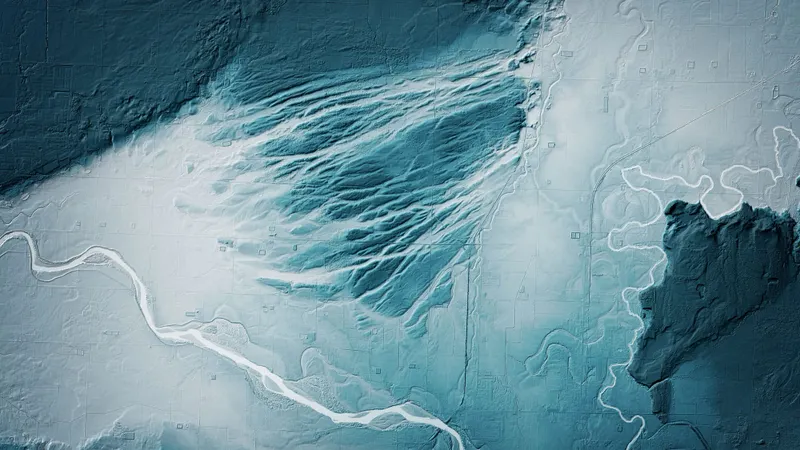
RIVERS Director of Moving Image, Wyatt Doyle interviews life long fly-fisherman and president of the One Fly Foundation, John Holland for an unique perspective on the role of recreational fly fishing in the conservation of the upper Snake River basin.
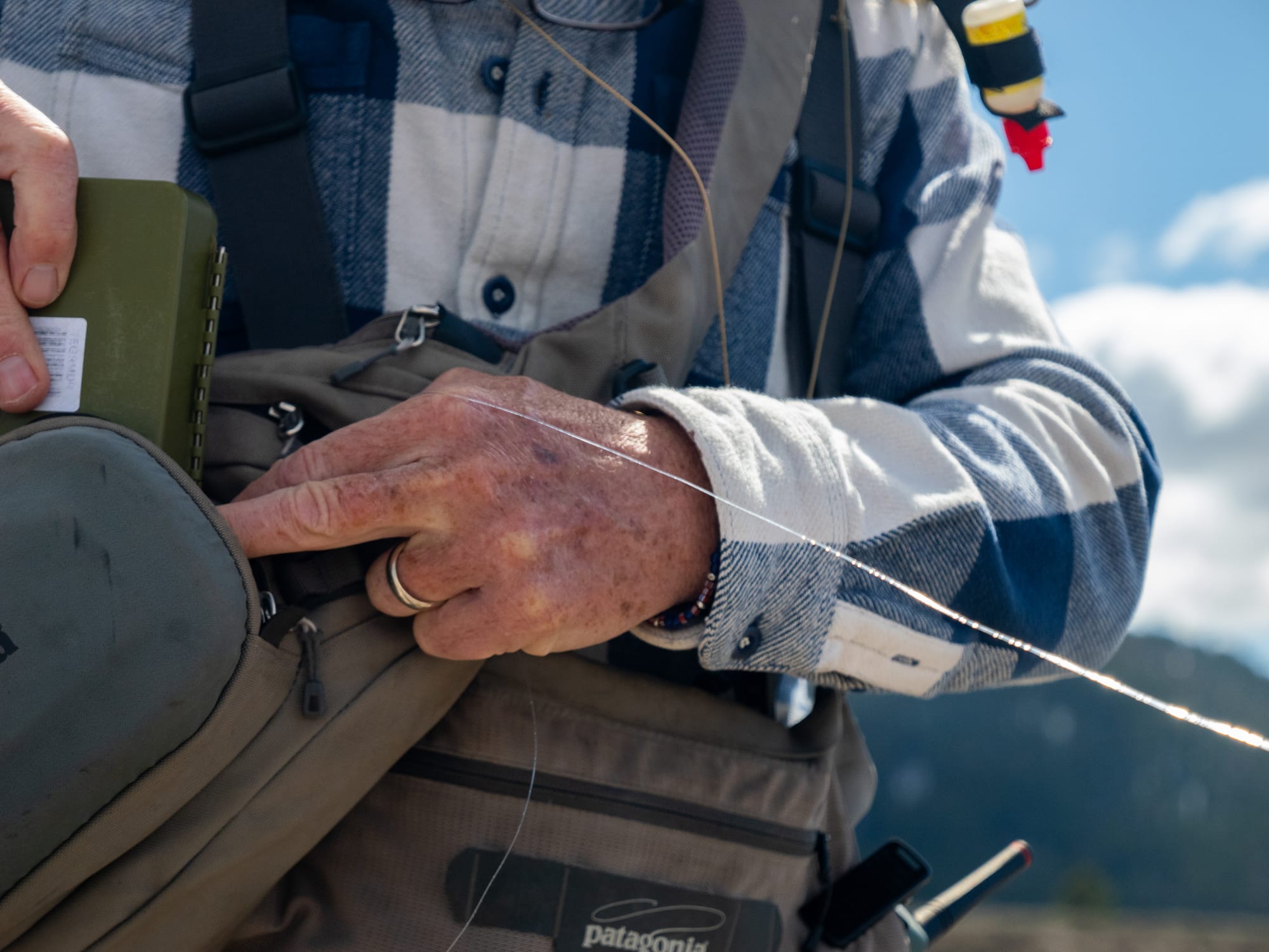
"The health of the river is really a function of — as a fisherman — the tug on the end of that line. That's almost like the greatest feedback loop." — John Holland
The One Fly Tournament turns forty this year. Where did it start?
The roots go back to an article Lee Wulff wrote for Outdoor Life — the question was simple: if you could only fish one fly for a day, what would you fish? Jack Dennis and Paul Bruun took that idea and made it literal. If you chose one fly and lost it, you stopped scoring points. That was the genesis.
It started as a social event, a way to get the guides and the valley together at the end of the season to celebrate the Snake River. But early on, there was a tragedy. One of the original guides, Peter Crosby, drowned during the first tournament trying to retrieve a boat that had slipped its anchor. From that loss came a commitment — to make this a cause, to support his family, and to put every dollar of net proceeds back into the river. The One Fly Foundation eventually helped put his daughters through college. That's been the mantra ever since.
In forty years we've raised close to four million dollars, all of it has come back into the Upper Snake — stream restoration, habitat improvement, research. And working alongside partners like Trout Unlimited and others, the aggregate impact across the watershed is probably closer to twenty-five or thirty million dollars.
Can you give a concrete example of what that funding has done?
One that's easy to recall: we worked with Trout Unlimited on Spread Creek, a main tributary of the Snake. There was an irrigation diversion that had been cutting off about six miles of upstream habitat — cutthroat couldn't get past it. We helped redesign the infrastructure so the rancher could still get what he needed for irrigation, but the fish could move through. Six more miles of spawning habitat, opened up. It was a genuine win-win, which is honestly harder to pull off than it sounds. Ninety-seven percent of the water rights in the Upper Snake drainage are allocated downstream to Idaho agriculture — largely potato farming. That's the reality everyone has lived with for a long time. You have to work within it.
How are the cutthroat doing?
Still healthy, I'd say. We haven't had to implement the kind of restrictions they've seen up in Montana, where warming temperatures have really started to bite. The Snake is holding. But every year is a different year — it's all correlated to snowpack, to flows, to what everybody upstream and downstream needs from her.
Here's what I find interesting though: forty years of tournament data, forty teams fishing essentially the same watershed every year, gives you a long-term picture that most fisheries don't have. The scores go up and down with snowpack, but the band of outcomes hasn't collapsed. People are still catching fish in the same range. That's a data point. It's reassuring. The fishermen haven't gotten any better — so if the numbers are holding, the river is holding.
What's the role of conservation in fly fishing more broadly?
I think there's been a real shift, especially post-COVID, when a lot of people relocated to the Rockies and put more pressure on these rivers at the same time conditions were getting harder to maintain. Anglers are starting to realize that the sport is only as good as the health of the water. Once you get obsessed with fishing, at some point you get obsessed with the river — and then you start asking why things are changing, and whether you can do anything about it.
It becomes pretty common sense. If your local fishery degrades, you want to know why. Is it pressure? Temperature? Bug life? All of it? That's just passion turning into something useful.
Do you think rivers are alive?
Yes. Rivers have many different biological living parts — the fish, obviously, but also the flora and fauna and the microbial life that forms the baseline for everything that uses the river. Without one part, the whole biological system gets thrown off. Rivers mimic living organisms in the complexity of their parts and in their fluidity. They're constantly carving new channels, the way people interact with the world and reshape it over time.
Young rivers are steep and violent, picking things up on the way down through steep cascading streams. As they get older they slow down and meander, depositing the sediment they've carried their whole lives. A young river and an old river are very comparable to young and old humans.
Do rivers need a voice, or do they speak for themselves?
I believe rivers have personality — every one I've encountered is different, but they go together like parts of a symphony. One might be the violin, another the bass, but when they all come together to form a drainage basin, that's the orchestra: stories, nutrients, human connection, all of it flowing eventually to the ocean.
I don't think rivers can speak for themselves. We have to speak for them — through storytelling, through data collection, or simply by bringing other people to the river to experience what's there. That's what the tug on the end of a line is, really. It's a feedback loop. It's the river telling you it's still intact. When the fishing seriously degrades, you're not getting that signal anymore. It's a reality check on the fate of fish and the fate of us humans at the same time.
John Holland is an executive producer of the documentary Tension and serves on the board of the One Fly Foundation, who celebrate their 40th anniversary on the Upper Snake River this year.