a short essay by Willie Henkel
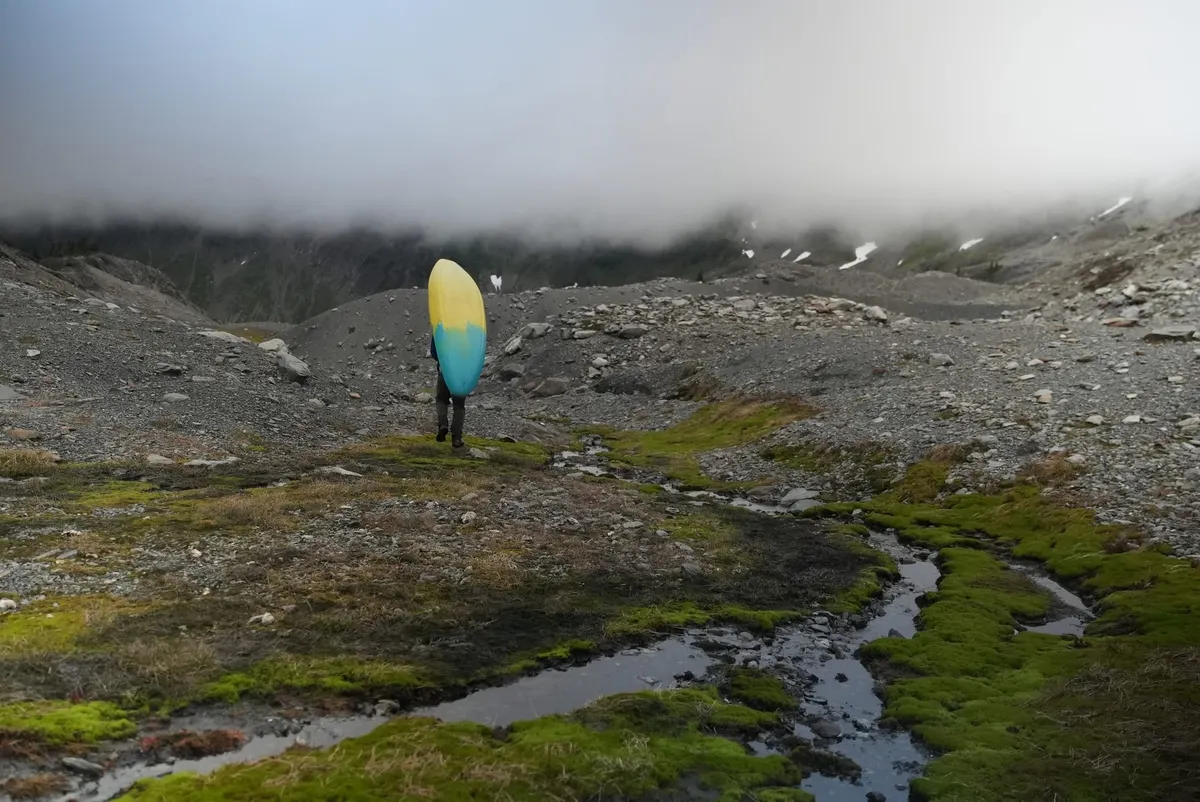
The kayak is strapped to my back, loaded with expedition gear and seven days of food. The trail climbs through old-growth spruce along the Elwha headwaters, the mighty river here is just a creek whispering through afternoon light.
In a few more miles, the trail disappears before cresting over Dodwell-Rixon Pass and drops into a different watershed entirely — the Queets. Carrying a boat out of one drainage and into the next, an abstract question gets literal: where does a river begin? Where does it end? Can we draw borders around rivers at all?
If you've been following our journey here at RIVERS, you know our answer: no.
I'm with expedition kayaker Chris Korbulic, who has spent two decades chasing first descents from Papua New Guinea to the Congo. He doesn't talk much about why he keeps going back to remote rivers, and you don't need him to. The answer is in how he reads a rapid, in the way he goes quiet on a portage instead of narrating how tired he is, or how hellacious the slide alder. Some people learn a place by studying it – Chris forms relationship to place by carrying a boat and camera through it.
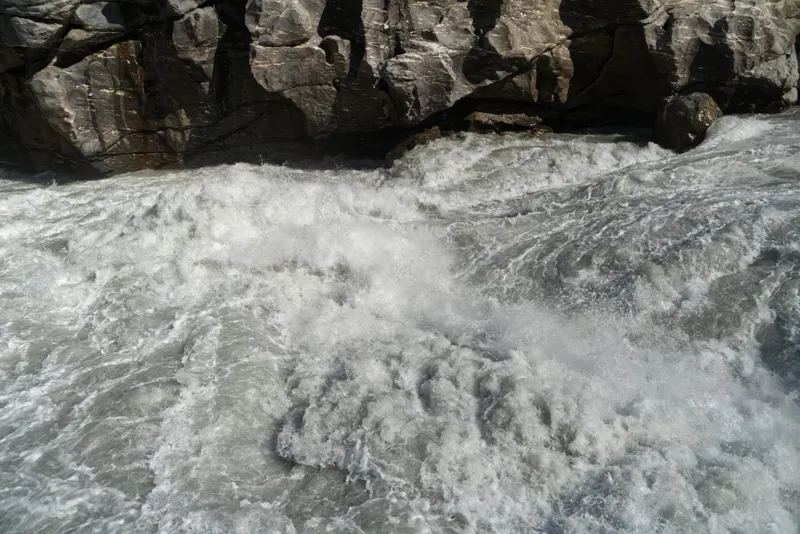
Two days later I'm perched twenty-five hundred feet above the ocean, looking down into a canyon of glacial blue water. Below, the Queets drops fifteen hundred feet in a single mile over Service Falls — the same sound I've found on every river since I started this work, fresh water sounding like all water, everywhere. The sound washes over even in its roar, a calming presence.
So how far are you willing to walk to learn something about a river? And in turn maybe something about yourself?
For us, it was fourteen miles over Low Divide with eighty pounds on our backs, then days of whitewater with no way out except down. But the real question was never about miles or vertical feet dropped. It's about what happens on the far side of the effort — the point where you stop thinking about endurance and just become someone who is here, paying attention. That's when a river stops being a subject you're documenting or descending and starts being a teacher. What it teaches isn't always about water. Half of what I learned on the Queets was about patience. The other half was about my own impatience — how badly I want a story to resolve, and how rarely a river obliges.
That night in camp, the conversation didn't stay on the Queets for long. It drifted to a dam a few watersheds over, then to century-old boundary surveys, then to rivers neither of us had visited. Every river's story is tangled up in a dozen others.
This story was made possible by Astral Designs. An independent company that Trusts Nature. This 25 mile hike and river expedition was done in their all new Expedition Grade Boot – the Pusha.
Author Bio
Willie Henkel is the Creative Director and co-founder of RIVERS. He is an ethnohydrologist and expedition kayaker whose research and fieldwork center on the relationship between people and freshwater — currently working on a graduate thesis following the Nooksack River from source to sea. His expedition work has taken him from remote first descents in Ecuador's Llanganates region to the Rondu Gorge of Pakistan's Indus River. RIVERS grew out these unique river experiences: a publication that treats rivers not as backdrop, but as protagonist.