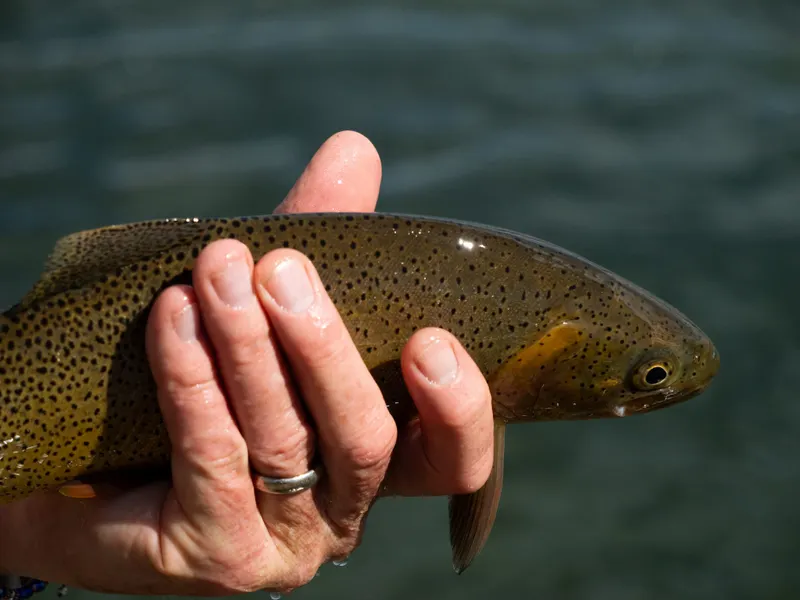
A Conversation with Anna Mounsey
Anna had just finished a Dungeness crab season off the Washington coast and was driving over Snoqualmie Pass with 4,000 pounds of salmon for her mother-in-law to sell when we got the call back.
Upon recounting the commercial fishing season and her prior draw to salmon fishing in general, I couldn't help but notice that she was getting lost in her own stories. A wealth of knowledge in her own field, she carries a sense of class and confidence in her storytelling that solidifies the fact that there is no other life for Anna.
In diving into her day-to-day life as a Commercial Fishing Captain, Anna touches on the sustainability of Bristol Bay, the highs and lows of being a female captain in a predominantly male-run business, and her own relationships to the rivers that form her “office”.
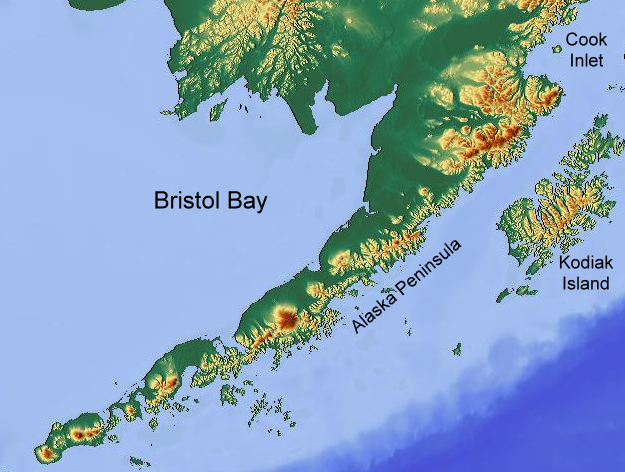
Bristol Bay Alaska
For those not familiar with the Bristol Bay salmon season, it is a wild sockeye salmon fishery located just north of the Aleutian Peninsula in Alaska. It consists of five river districts at the mouths of five pristine watersheds. It is home to all five species of salmon and sees the largest sockeye salmon run in the world. This helps to support the 2.2 billion dollar industry, providing thousands of jobs. It is largely referred to as a sustainable fishery due to its limited bycatch and strict regulations implemented by many biologists.
RIVERS: Can you tell us a little bit about your personal journey into commercial fishing and how you got into commercial fishing, and how long you've been working in Bristol Bay?
ANNA: This coming summer will be my 10th season! I started crewing in Bristol Bay during the summer of 2017. Growing up, I went salmon fishing with my grandpa in the South Puget Sound, and in high school, I went charter fishing with my dad for salmon. I always loved being on the ocean. I actually started as a charter fishing deckhand because that was the first entry point I saw. At a young age, I knew that I wanted to work on the water and that I wanted to work hard.
My boyfriend at the time in high school and current husband introduced me to commercial fishing. His family all ran boats in Bristol Bay and Southeast Alaska. His mom being the infamous Fran Kaul who runs the Janet Elaine, and his dad, Dave, who runs the Zealot. My first time commercial fishing was on the F/V Zealot during a Puget Sound seining opener at age 17.
Alec framed it as a “boat ride”. I thought, Sick! A boat ride! Sounds great! I didn't know what was happening when Alec started putting me in rain gear, slapped goggles on my face and said we were about to stack gear. I went out on the pile and fell probably 15 times.
At the end of the day I said, “Alec, I am never fishing ever again.”
Two weeks later, I got a paycheck and thought the day probably wasn't that bad.
While looking for summer jobs to fund my college tuition at Montana State, my husband's mom needed a deckhand for the summer, and he said to give her a call. She ended up offering me a job for my first season. After that, I completely fell in love with Bristol Bay. 2017 was my first season crewing for Fran on the Janet Elaine. I then crewed for Fran for five years before buying my own boat, the Syren.
Rivers: Can you give me a quick rundown of the logistics of a fishing season?
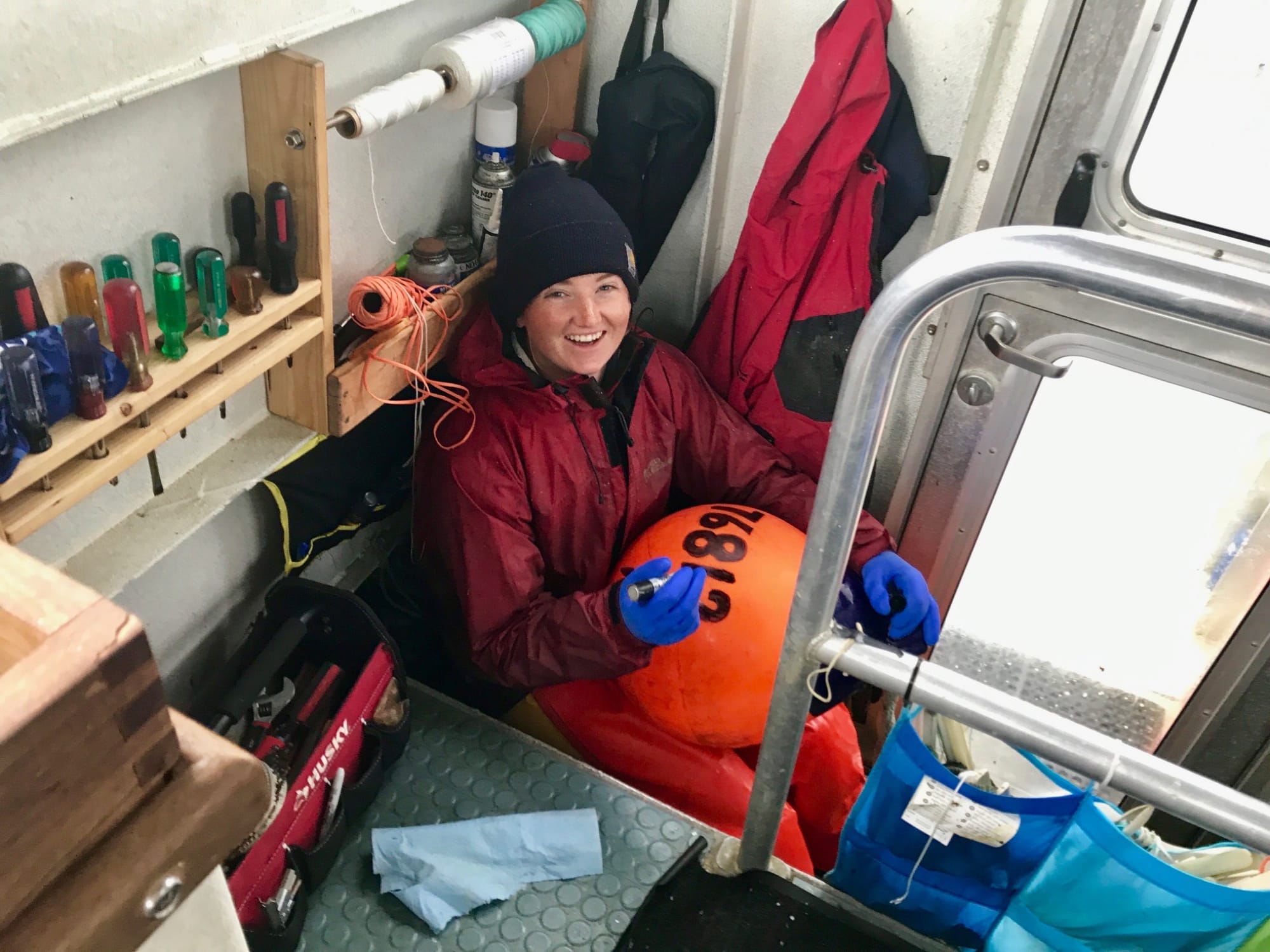
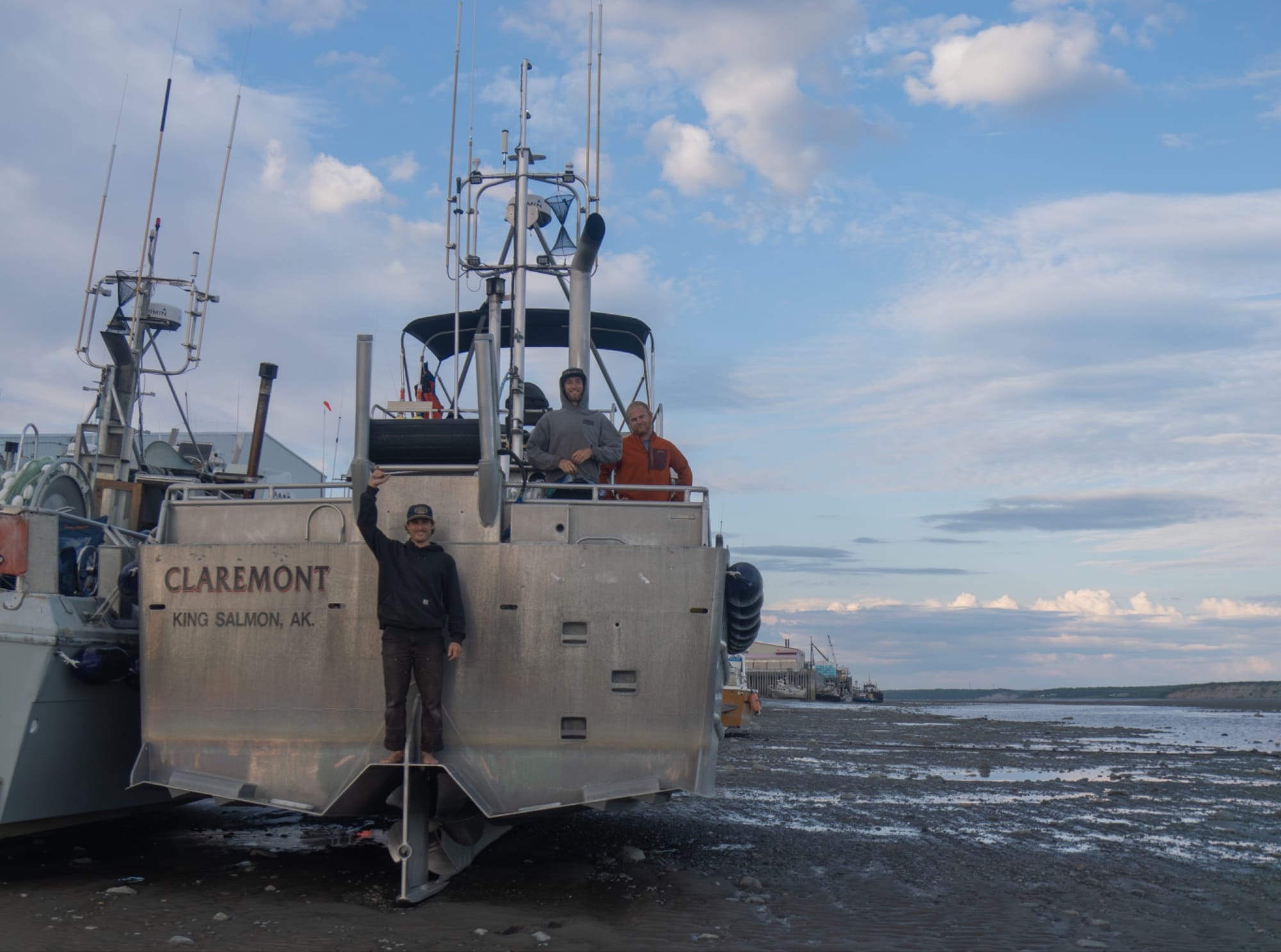
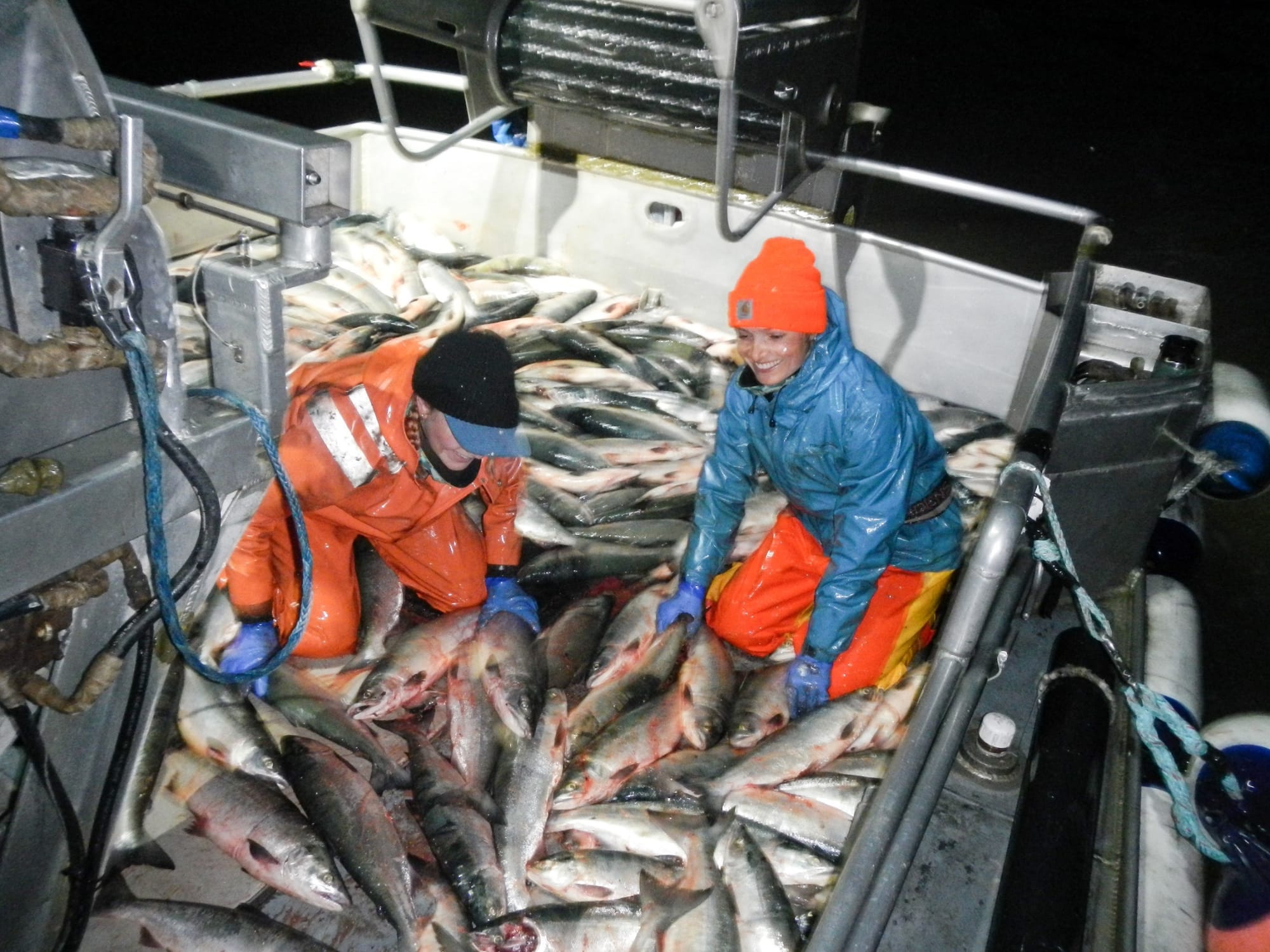
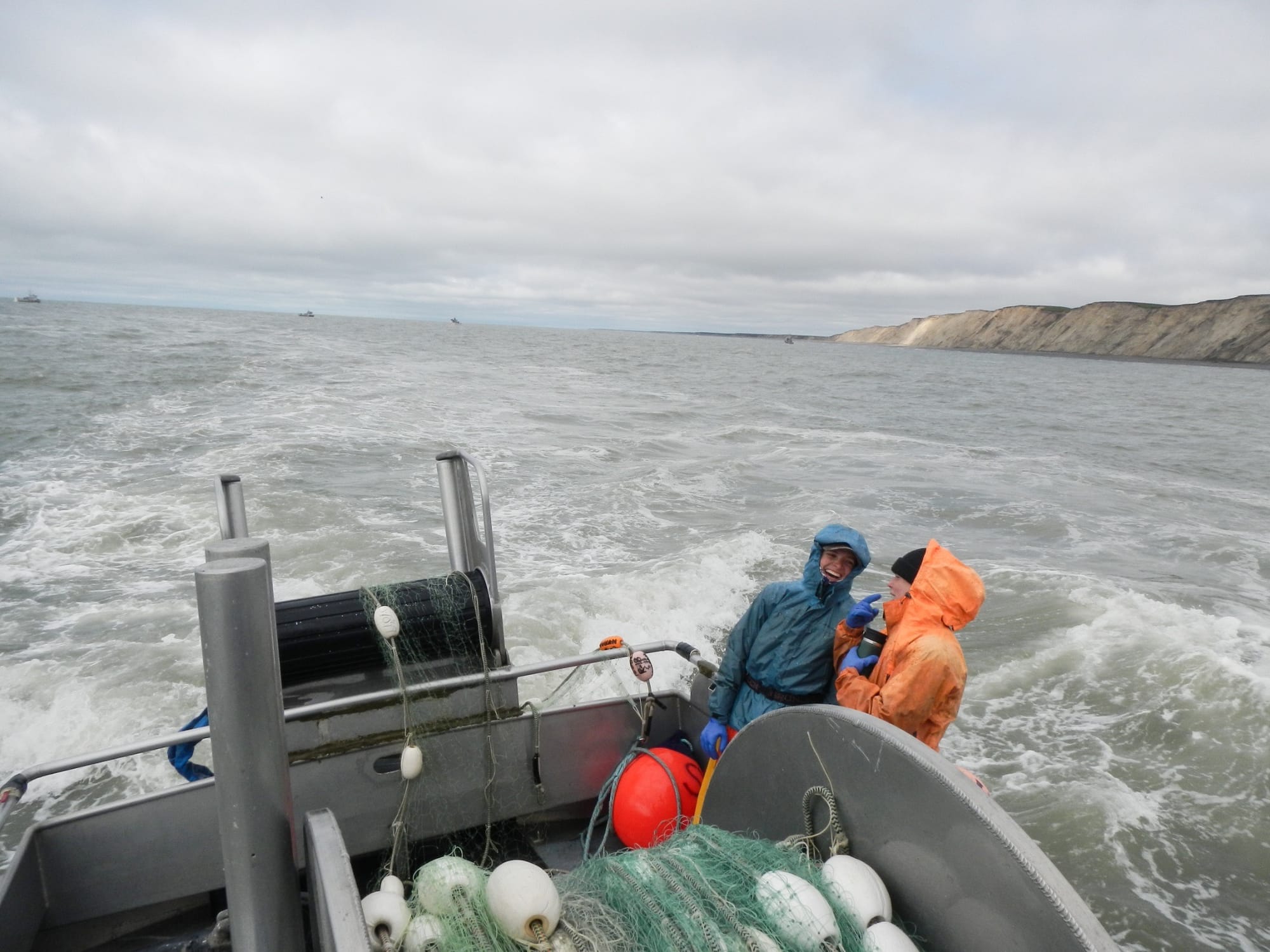
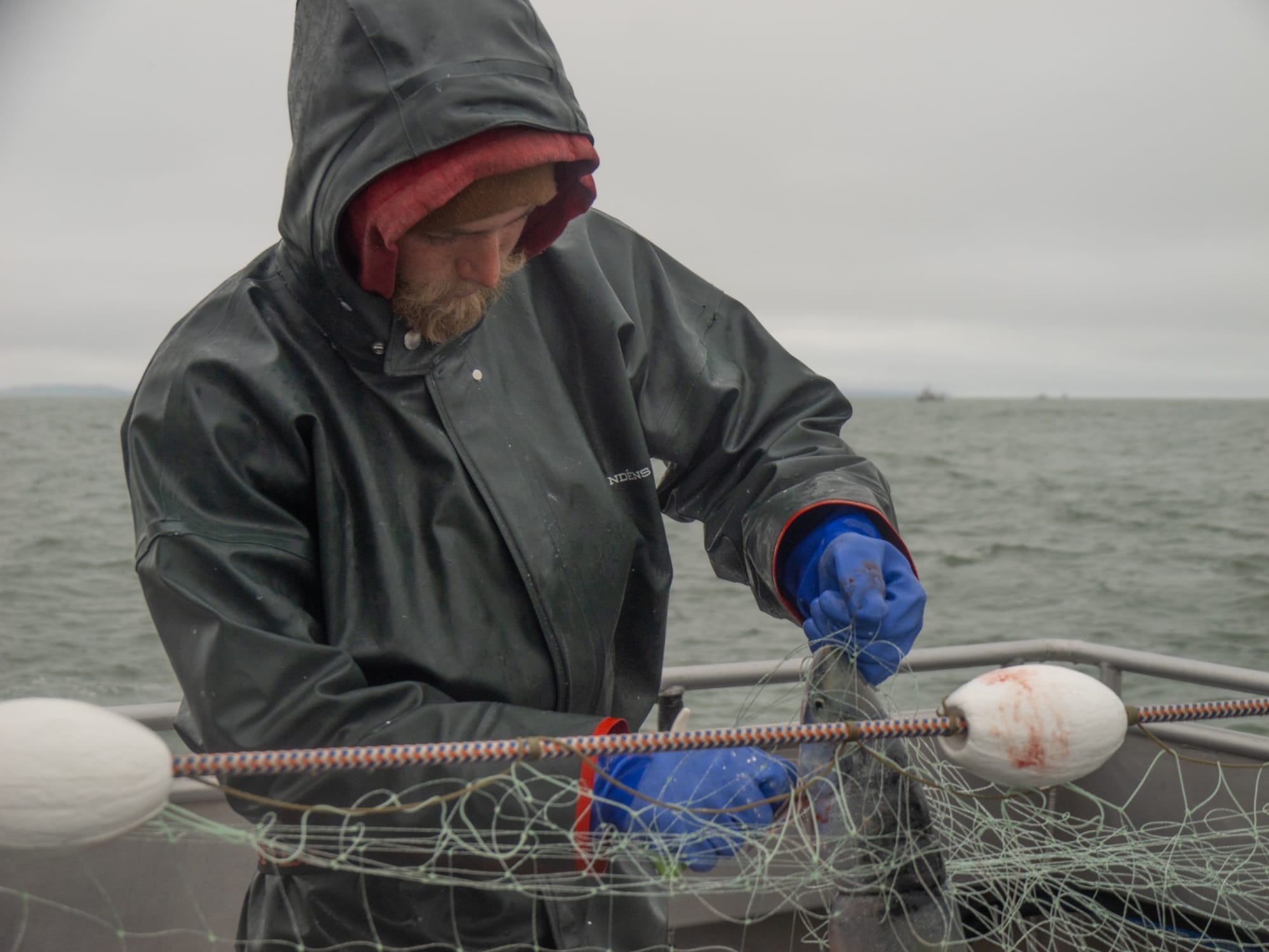
Anna: Bristol Bay is short and sweet -we're on these small 32 foot aluminum boats, and most of that boat is a back deck. The sleeping quarters and galley are crammed and once you're out there, you're on the water for about six weeks -completely away from a dock or land.You use a gillnet, which is a net with cork flotation on the top and a lead line on the bottom which it sits perpendicular to the water column.
The salmon swim into the net, and their gills get caught. To harvest the salmon, you bring the net back on with a hydraulic drum. As the net comes back, your crew picks the fish.
However, there are many moving targets getting you to the point of actually picking the fish. Hiring crew, ordering food and provisions for the year, planning the boat projects, buying gear and so much more.
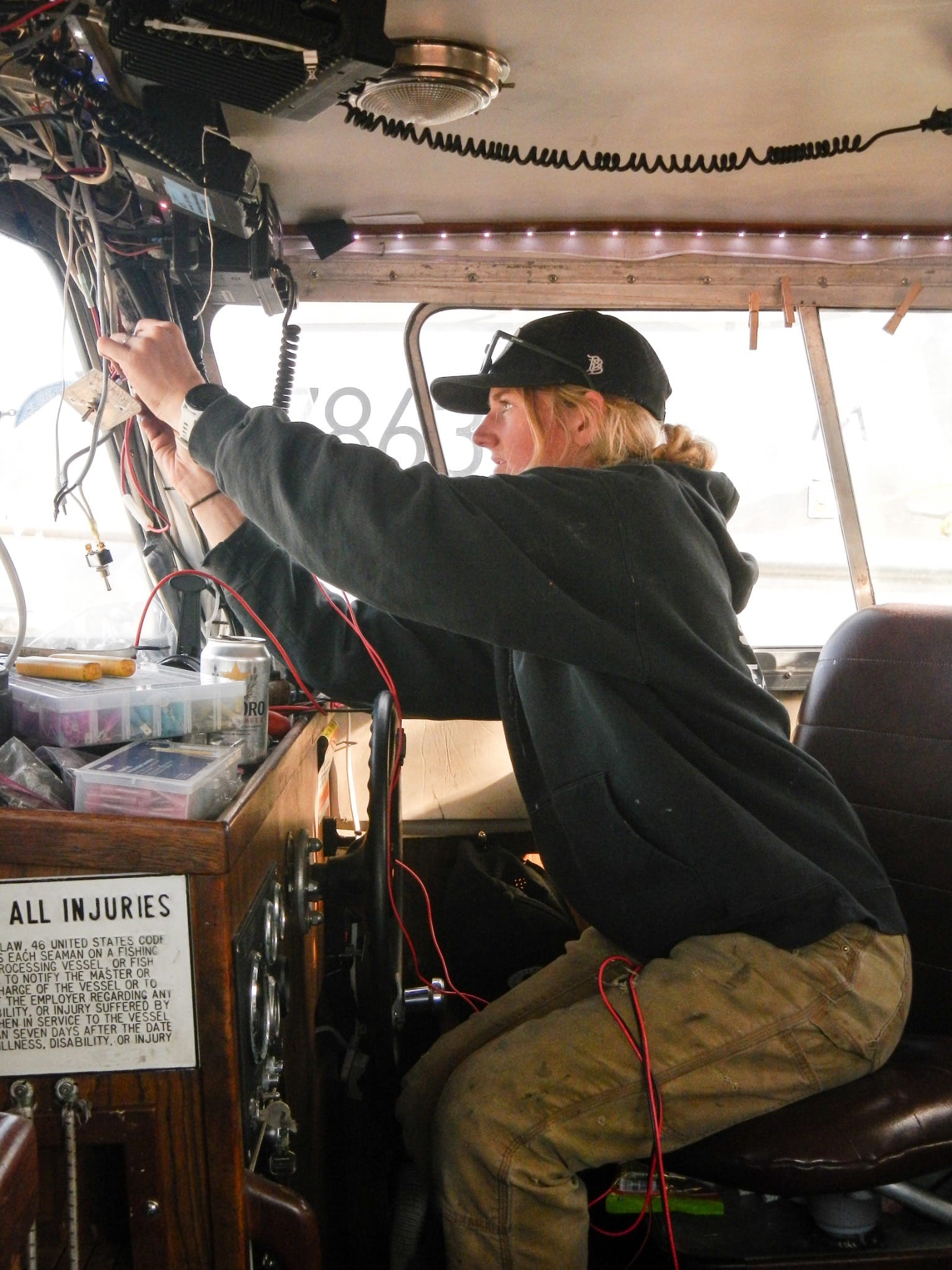
The questions that haunt my spring -what kind of projects do I want to do this coming season? Does my boat turn on? How's my electrical system doing? Did my inverter fry? Do I need new batteries?
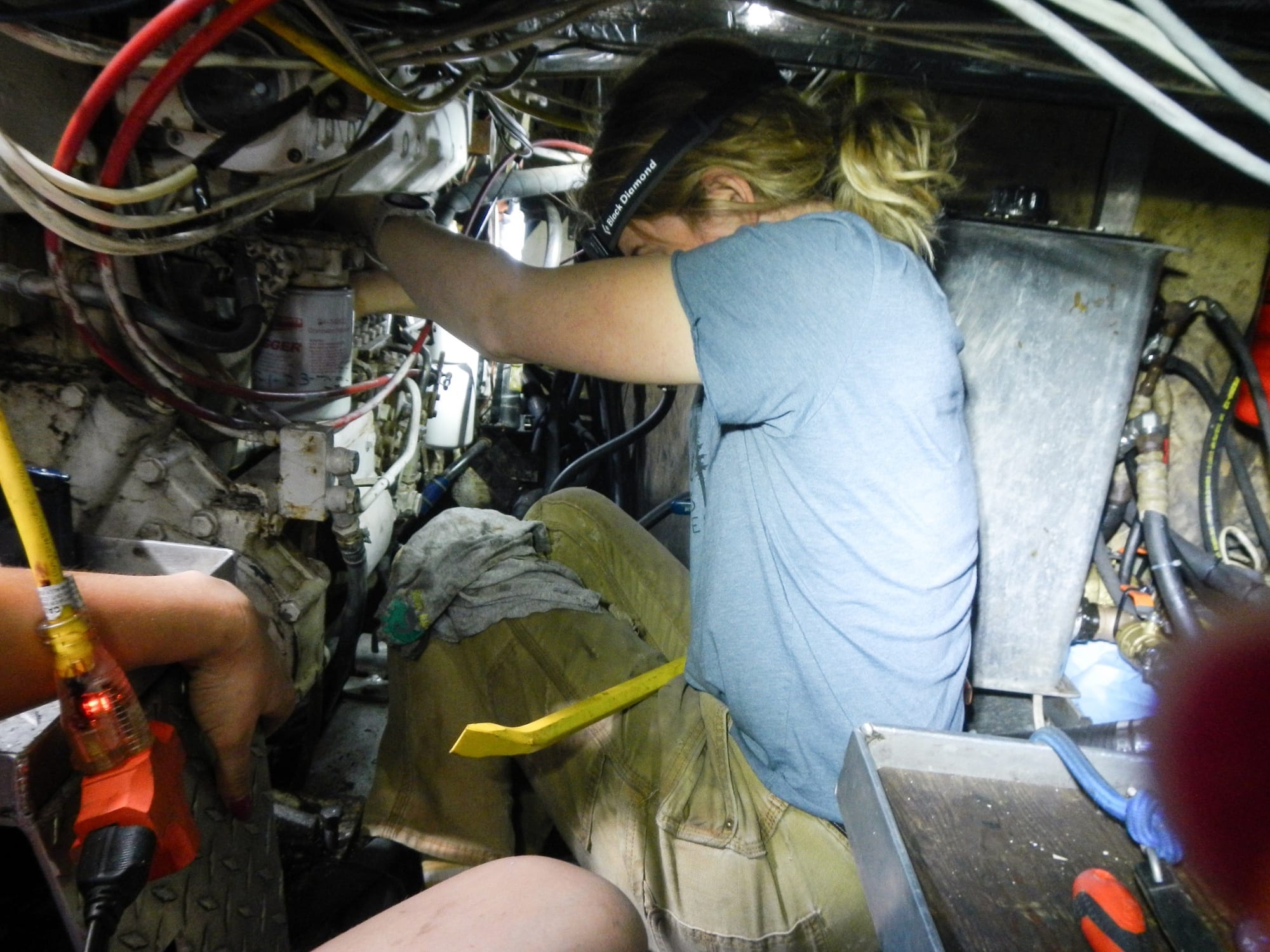
A responsive boat owner will just kind of go down a work-list. After a few years, these boats end up being pretty simple.
Rivers: Widely referred to as a sustainable fishery, can you explain why the river districts of Bristol continue to see a rise in wild salmon populations, while supporting the billion dollar fishing industry in the local area?
Anna: I have to credit a lot of the health of the fishery to the biologists and the scientists who are doing so much amazing research up there.
The biologists consider salmon escapement and ensure that they get the appropriate escapement numbers so that we continue to have a healthy run. I think with all natural, wild systems, there's a lot at play, such as environmental and anthropogenic influences that affect a salmon run.
And at the end of the day, some of it depends on the beauty of the natural world. I credit the biologists for ensuring that we continue to have a sustainable, wild fishery. There's a ton of amazing research going on, and these fish seem to be thriving!
Rivers: Can you explain how the biologists use their findings to allow for profitable fishing and a healthy salmon population for the future?
Anna: It's dictated by how many salmon swim through each district. The Bristol Bay Salmon run goes for approximately three months. Starting at the beginning of June and running through August.
For us to start fishing, we rely on the biologists to open the fishery based on escapement numbers. These are predetermined numbers calculated by biologists based on the number of salmon that swim past the river mouth into the spawning grounds. The scientists physically count the salmon, so they can make a conscious decision on when to open up fishing seasons. During early to mid-June, the fisherman watch the test fishery numbers from Port Moller, which is a test fishery to the south of Bristol Bay. During the testing, the fishermen and scientists catch a sample set of salmon each day and test them genetically to determine which river district they are going back to.
The information from the test fishery can indicate which river district some of the salmon are headed to. Finally, with all of the information at hand, the biologists will start to fish. As the season progresses and more fish get through the district to the spawning grounds, the fishing time increases until eventually, the district hits the escapement goal. Once this happens, the fishing season is open 24/7.
Rivers: In bringing up the fact that Bristol bay is one of the last wild fisheries, can you explain the difference between farmed salmon and wild salmon?
Anna: I would love to! Wild salmon is objectively so much better than farmed salmon. The wild salmon naturally reproduce after living a life in the Bering Sea, picking up nutrients throughout their lifespan only to return to the small, pristine stream that they came from.
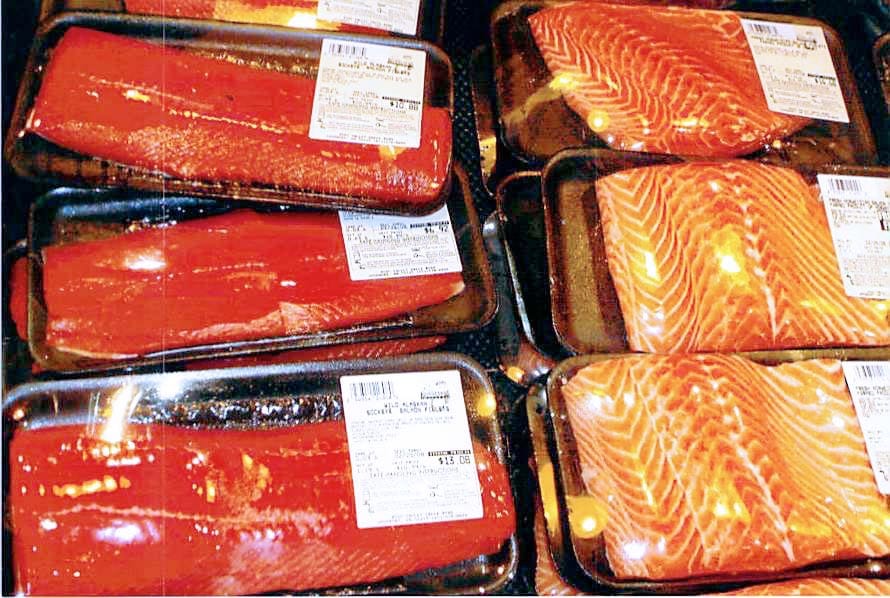
The wild salmon rely solely on their natural habitat for their food. Wild salmon are packed full of protein and Omega-3 fatty acids, and are some of the cleanest protein sources in the world, versus farmed fish. Depending on the style of farming, whether it's in aquaculture tanks or in open net pens, farmed salmon lacks the distinct nutritional value that wild salmon boasts.
As a consumer, you can really tell the difference between a wild and farmed Salmon. Farmed salmon lacks that gorgeous red coloring and firm texture
There's nothing better than taking a fish from the net onto the boat and into the oven.
Rivers: What is it like being a female captain in a historically male run business?
Anna: Thanks for asking that—and for acknowledging it. I’m super stoked, honestly. When I started crewing, it felt more normal than it probably had been before, and more women were getting into it—crewing, buying boats. I got on Fran’s boat because Tara had bought one, and seeing her out there made it feel possible.
When Fran started running her boat back in 1988, there weren’t many women out there. She’s seen the fishery change in a way my generation hasn’t. And yeah, there are ups and downs. I’ve been called some pretty derogatory names over the years—every season, really. Maybe once or twice I deserved to be called an asshole—but you don’t have to make it about something else, you know?
There was even a boat that kept track all season of how many times I “corked” them. And I kept thinking—are you doing this to every boat? Or just me? Why me?
But staying with the positives—I’m just so stoked to see more women out there, really doing it. Not just participating, but getting after it, understanding how financially viable this work can be, and taking up space in a male-centered industry. There’s something powerful about that—about shifting where the money and opportunities go.
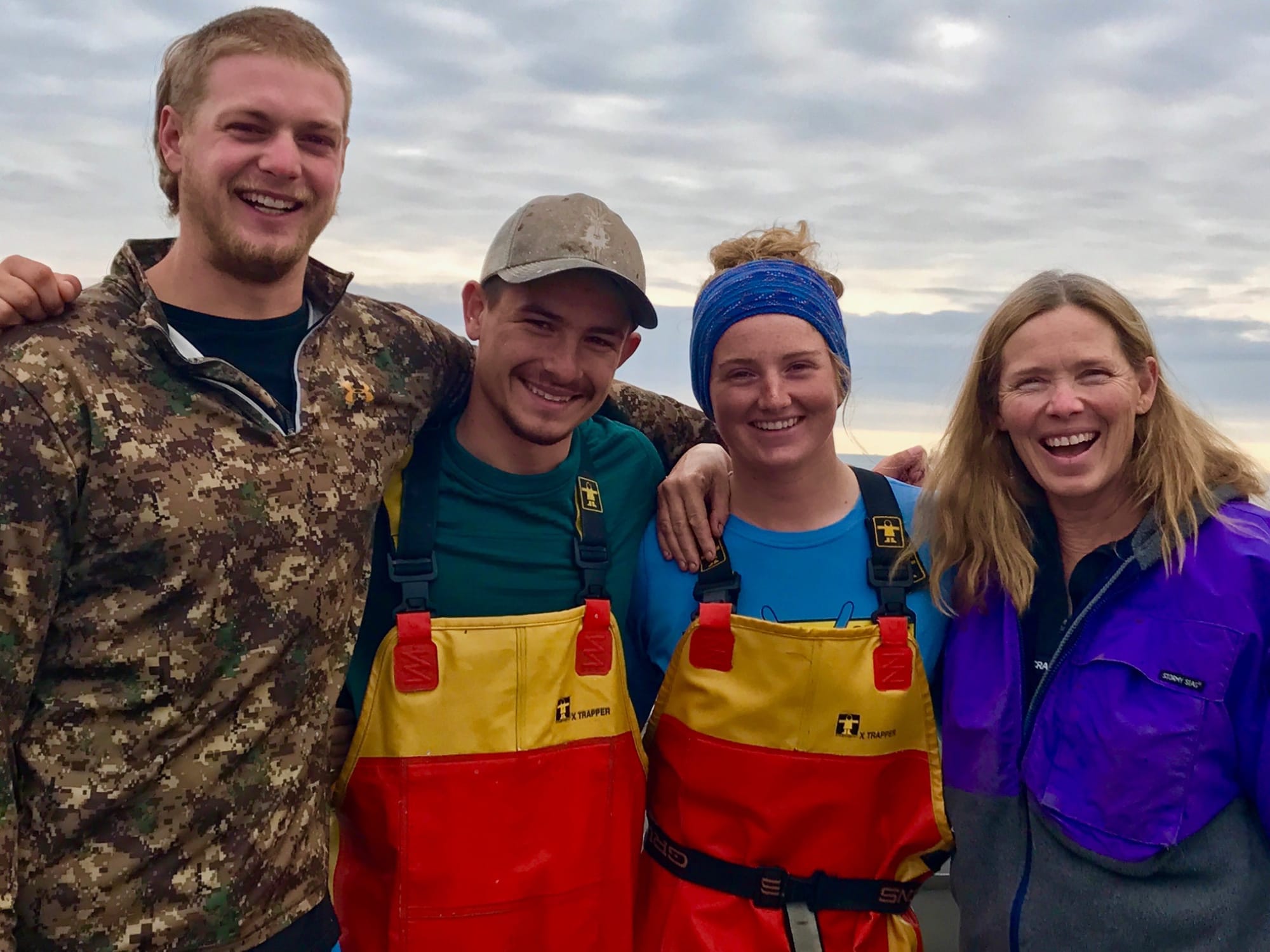
And these women are incredible. They’re master mechanics, they run their boats, manage crews—it’s inspiring. Huge shoutout to Fran and Tara. Tara especially helped me see my dream of buying a boat as something tangible. I could call her and ask about loans, financing, business plans—she was so open and knowledgeable. Without that, it would’ve been a lot harder.
That’s one of the coolest parts—being part of this small group of female captains. They’re not just badass on the water—they’re pilots, skiers, hunting guides, moms, sisters. Just incredibly capable people.
A lot of the success I’ve had is because of the women who came before me—who were brave when this wasn’t a space for women, who bought boats anyway, who proved people wrong and paved the way. I’m just really thankful for that.
Rivers: What do you believe the role of storytelling is in the protection of rivers?
Anna: I think it's so much of a River's representation in the stories that it evokes from people and their own experiences. Those stories are being passed down, and the true human connection to the stories. They really connect you to that place. I think it motivates and encourages people to want to protect that place.
Rivers: are rivers alive?
Anna: it's funny, you ask this, I'm looking at one right now! I'm inspired by rivers. You know, it slowly meanders through this watershed. And then it flows all the way into the Ocean and then everything that it gives life to from the top stream to the ocean.
I think, yeah. I think they're alive and they're not in the like biological sense, I would say they're, but they're like. Living in stories and they're living like the way that they shape everyone's lives and perspectives.
RIVERS is a publication built on the belief that the best stories about rivers come from people who live and collaborate with them most often. These are exploration dispatches, environmental investigations, Indigenous water stories, exclusive interviews and cultural essays from the edge of the freshwater world. If that's the kind of writing you want more of, subscribe for free for our monthly email newsletter updates.