For those of us who live within the greater Columbia River Basin and Salish Sea watershed, our lives are deeply interconnected with the ecosystems that sustain this place. Few examples illustrate this more clearly than the plight of the Southern Resident Killer Whales. These beings, now on the brink of extinction, depend upon salmon that originate in the Columbia River Basin and the Snake and Salmon River drainages.

These salmon—and the whales that rely upon them—are kin to the many Coast Salish Nations who have lived with and cared for the waters of the Salish Sea and the rivers that feed this vast estuary since time immemorial. Through the voices gathered in this book, readers are invited to understand these relationships not as abstract environmental concerns, but as living responsibilities grounded in reciprocity, respect, and right relations.
One of the most powerful sections of the book is the foreword, to the Witness, written by Jay Julius, former Chairman of the Lummi Nation, president of Se'Si'Le, and lifelong fisherman. Julius reflects on what it means to be a witness: to witness the rivers, forests, seas, and Southern Resident Killer Whales that are inseparable from the lifeways and responsibilities of Coast Salish peoples. He speaks of what he calls the Salmon Nations, reminding readers that these are not simply ecological resources but living relatives whose fates are bound together with those of human communities.
Through these reflections, we begin to understand the depth of the relationships that connect the Columbia River Basin to the Salish Sea. We are invited to recognize that the survival of salmon, killer whales, forests, and Indigenous cultures cannot be separated from one another. To witness, in this sense, is not merely to observe. It is to acknowledge responsibility, to stand alongside, and to participate in the work of protecting and restoring these relationships.
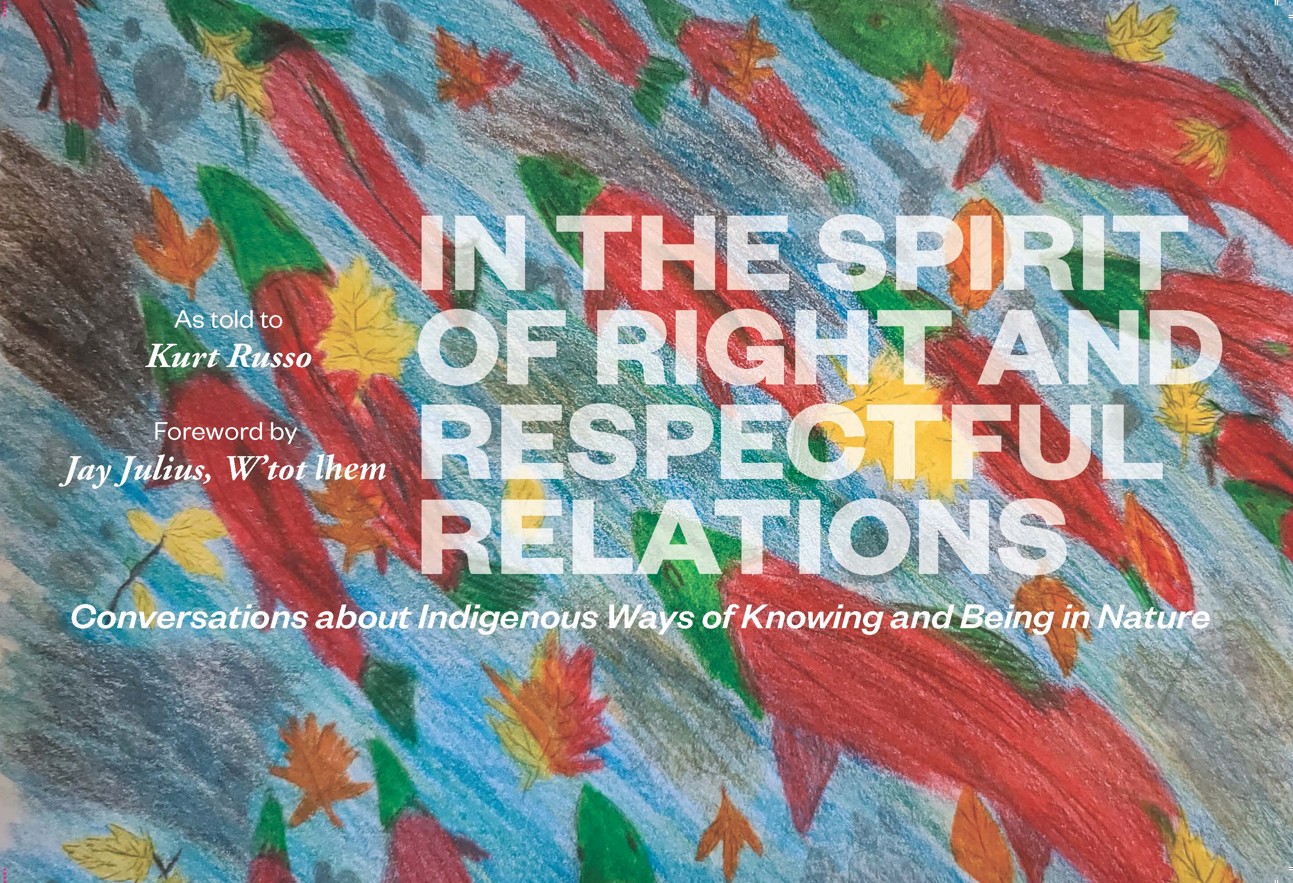
Each chapter emerges from conversations held on Orcas Island, where Kurt Russo gathered teachings, stories, and reflections from Indigenous leaders and knowledge holders across the region. Around these voices, Russo weaves historical context, ecological insight, and thoughtful reflection. The result is a text that allows the words of these leaders to remain at the center while providing readers with the context necessary to understand their significance.
The breadth and depth of these teachings help illuminate the meaning of right relations. Readers are guided through histories of colonization, the Doctrine of Discovery, the settlement of the Columbia River Basin, and the construction of dams that transformed what was once one of the most productive salmon river systems on Earth. The book traces how these histories continue to shape the present, affecting not only salmon populations but the cultures, economies, and relationships that have long depended upon them.
Yet In the Spirit of Right and Respectful Relations does not dwell solely in the past. Rather, it asks readers to confront the realities of the present and the possibility of extinction—not only the extinction of species, but the loss of relationships, responsibilities, languages, and ways of knowing. The question becomes not simply how we prevent extinction, but how we learn to live differently in its shadow.
What makes this book particularly powerful is its ability to bring readers into conversation with worldviews that may differ from their own. Rather than offering simple answers, it creates space for reflection. It asks us to consider how our assumptions about land, ownership, stewardship, and progress have shaped the world around us, and what might become possible if we approached these questions through a framework of reciprocity and respect.
Ultimately, In the Spirit of Right and Respectful Relations is a book about learning how to come into relationship. It challenges readers to examine their own worldviews while creating space to encounter others with humility and openness. In doing so, it offers a profound reflection not only on rivers and watersheds, but on life itself—on what it means to belong to a place, to care for it, and to live responsibly within lands and waters that have been stewarded by Indigenous peoples since time immemorial and will continue to be long into the future.
For those seeking to better understand the intertwined futures of salmon, Southern Resident Killer Whales, Indigenous sovereignty, and the rivers that connect them, this book is an essential place to begin. More than a history, more than an ecological account, and more than a collection of teachings, it is an invitation to witness—and through witnessing, to become accountable to the relationships that sustain us all.
You can learn more about In the Spirit of Right and Respectful Relations and order a copy here:

RIVERS is a storytelling project dedicated to exploring our relationships with watersheds through culture, environment, and exploration. Our book reviews are reflections rather than ratings. We highlight works that deepen our understanding of water, place, and relationship, while connecting their ideas to the rivers and watersheds we call home. Each review serves as an invitation to read further, think more deeply, and engage with the questions these books ask of us.